Donald Trump mandates acceleration of the nuclear arsenal development and immediate testing, warning that ‘China could match the U.S. within five years’
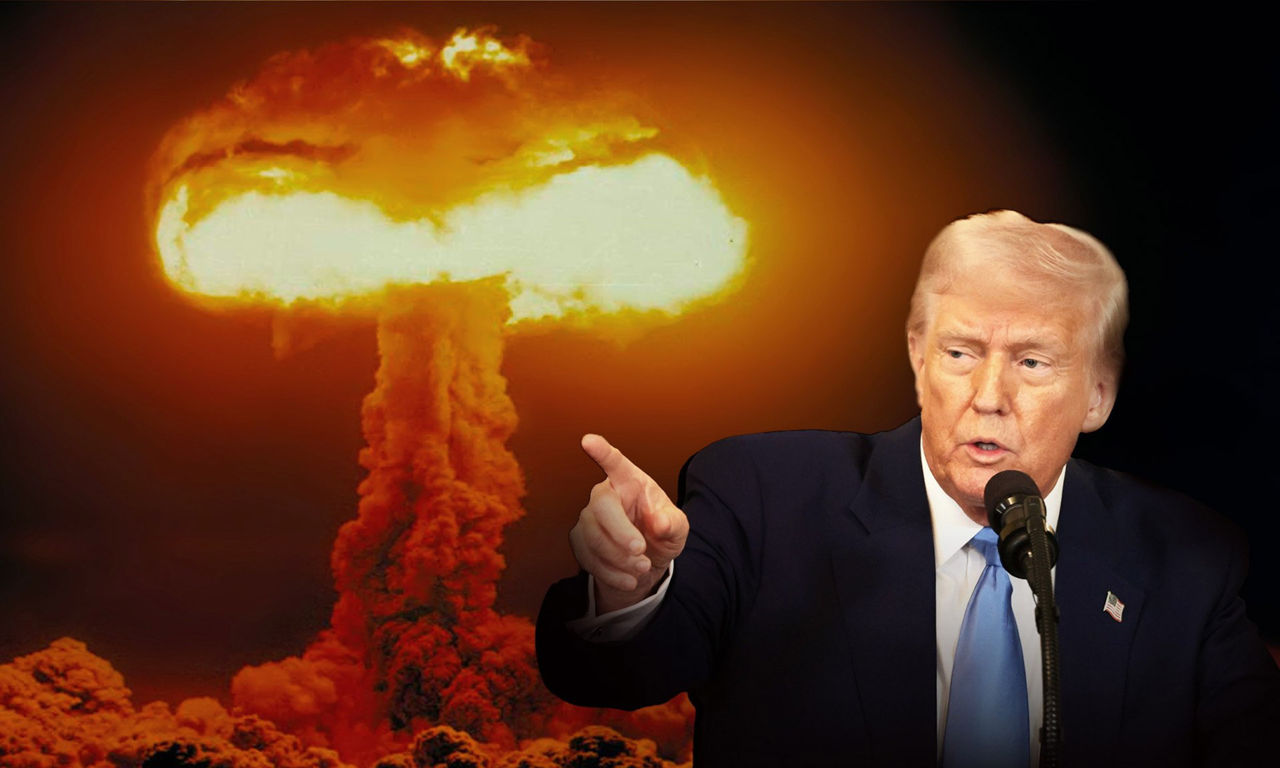
Donald Trump Orders Immediate Nuclear Weapons Testing, Revives Cold War-Era Tensions
Washington, October 30, 2025 — In a move that has sent shockwaves across global capitals, U.S. President Donald Trump has ordered an immediate ramp-up of America’s nuclear weapons programme, including the resumption of nuclear weapons testing after more than three decades.
The surprise announcement, made late Wednesday via Trump’s Truth Social account, came just hours before his scheduled meeting with Chinese President Xi Jinping in Busan, South Korea, where the two leaders were expected to discuss trade, regional security, and military competition in the Indo-Pacific.
“The United States has more Nuclear Weapons than any other country,” Trump wrote. “Russia is second, and China is a distant third, but will be even within five years. Because of other countries’ testing programs, I have instructed the Department of War to start testing our Nuclear Weapons on an equal basis. That process will begin immediately.”
The directive effectively ends a moratorium on U.S. nuclear testing that has been in place since 1992, marking a major departure from decades of bipartisan restraint on nuclear experimentation.
The End of a 33-Year Pause
The United States last conducted a full-scale nuclear detonation at the Nevada Test Site in September 1992. Since then, all nuclear powers, including Russia and China, have adhered to a voluntary halt on explosive testing under the Comprehensive Nuclear-Test-Ban Treaty (CTBT) framework, though the U.S. never ratified the treaty.
Arms control experts warn that the Trump administration’s decision represents a historic reversal of post-Cold War policy. “The U.S. has no technical or strategic need to resume nuclear-explosive testing,” said Daryl Kimball, executive director of the Arms Control Association. “Restarting tests could unravel decades of international stability and trigger reciprocal actions by Russia, China, and possibly North Korea.”
The National Nuclear Security Administration (NNSA) maintains the U.S. stockpile through high-tech simulations and subcritical experiments that do not cause nuclear explosions. Experts note that reactivating full-scale testing infrastructure could take two to three years, despite Trump’s order for immediate resumption.
A Global Arms Race Rekindled
Trump’s justification for resuming testing is rooted in fears of China’s rapid nuclear expansion. The latest data from the International Campaign to Abolish Nuclear Weapons (ICAN) shows:
| Rank | Country | Estimated Warheads |
| 1 | Russia | 5,500 |
| 2 | United States | 5,044 |
| 3 | China | 600 |
| 4 | France | 290 |
| 5 | United Kingdom | 225 |
| 6 | India | 180 |
| 7 | Pakistan | 172 |
| 8 | Israel | 90 |
| 9 | North Korea | 50 |
The U.S. and Russia together hold over 90% of the world’s nuclear arsenal, but China has been modernizing and expanding its capabilities rapidly. According to the Pentagon’s 2024 report, Beijing could field 1,000 warheads by 2030, up from roughly 600 today.
Trump’s public remarks underscore his anxiety over that trajectory. “China will be even [equal] in five years,” he warned — suggesting that the new testing programme is aimed at maintaining American superiority before China narrows the gap.
A Diplomatic Earthquake
The timing of the order, coinciding with Trump’s Asia trip, has raised eyebrows among diplomats and analysts alike. By announcing it just ahead of talks with Xi, Trump appears to be sending a deliberate message of strength.
“This is not accidental,” said Dr. Michael Krepon, founder of the Stimson Center. “Trump is signalling that nuclear deterrence — not dialogue — will define America’s strategy toward China and Russia.”
However, allies expressed concern that the decision could destabilize existing treaties and embolden adversaries. European Union officials, speaking on background, called the move “deeply troubling.” NATO members fear the U.S. could face renewed anti-nuclear protests similar to those that shook Europe in the 1980s.
Inside the Pentagon: Mixed Reactions
At the Pentagon, officials scrambled to interpret the president’s order. Some career defense staff were reportedly caught off guard by the abrupt announcement. “We’ve not been briefed on any operational timeline,” one Defense Department source told Reuters. “Implementing explosive testing would require environmental assessments, congressional notification, and safety reviews that could take years.”
Others within the administration argue that limited testing — such as subcritical or laboratory-based verification — could be used as a show of power without triggering full-scale detonations. The ambiguity of Trump’s directive leaves room for interpretation, though the rhetoric suggests a desire for real explosive tests.
A Throwback to Cold War Posturing
During the Cold War, nuclear tests were symbols of national might. The U.S. conducted 1,032 tests, more than any other nation. These experiments, carried out from the deserts of Nevada to the islands of the Pacific, shaped both military science and political theatre.
After the 1991 collapse of the Soviet Union, President George H.W. Bush initiated a halt to nuclear testing, and subsequent administrations — including Clinton, Bush Jr., Obama, and even Trump during his first term — maintained it.
Resuming tests would place the U.S. in direct violation of global norms that have held for three decades and could erode Washington’s moral authority in future arms-control negotiations.
UN Treaty and Global Backlash
The United Nations Treaty on the Prohibition of Nuclear Weapons (TPNW) — adopted in 2017 and ratified by 93 countries — explicitly bans the development, testing, possession, or threat of nuclear weapons. The U.S., Russia, and other nuclear states did not sign the treaty, but it has strong symbolic value.
In a statement issued Thursday, ICAN, the Nobel Peace Prize-winning coalition behind the TPNW, condemned Trump’s decision. “This reckless act endangers global security and puts millions at risk,” it said. “It undermines the international consensus that nuclear weapons must never be used or tested again.”
The UN Secretary-General António Guterres urged restraint, calling for “renewed dialogue, not new detonations.” The European Union expressed “grave concern,” and the Japanese government — the only nation to have suffered nuclear attacks — described the move as “deeply regrettable.”
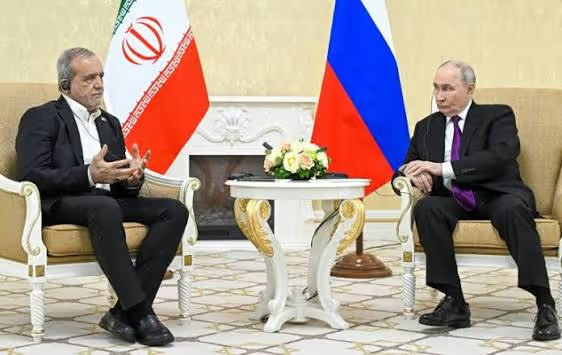
Meanwhile, Russia and China issued cautious responses. The Kremlin said it would “study the implications carefully” but reminded the world that Moscow retains “the most advanced nuclear deterrent.” Beijing’s Foreign Ministry criticized the U.S. for “reviving dangerous Cold War thinking.”
Regional Repercussions: Asia on Edge
Trump’s declaration could also alter strategic calculations in Asia, where nuclear tensions already run high. Earlier this week, the president announced plans to share nuclear-powered submarine technology with South Korea, deepening Washington’s security footprint in the region.
In Tokyo and Seoul, analysts worry the resumption of nuclear testing could provoke North Korea to conduct fresh underground detonations of its own. “If the U.S. tests, Pyongyang will follow,” warned Chung Min Lee, a senior fellow at the Carnegie Endowment.
India and Pakistan, long-standing nuclear rivals, may also feel pressure to update their arsenals. Analysts say renewed global testing could indirectly justify further regional modernization.
Political and Domestic Fallout
At home, the announcement has drawn sharp criticism from Democrats and even some Republicans. Senator Chris Murphy (D-CT) called it “an invitation to global chaos,” while Republican Senator Mitt Romney warned that “testing nukes in 2025 is not strength, it’s regression.”
The Department of Energy, which manages the U.S. nuclear arsenal, has not yet released a formal plan for testing. Legal experts note that Congress controls funding, and any real testing could be blocked by lawmakers unless additional appropriations are approved.
Still, Trump’s rhetoric has reignited debate over America’s nuclear posture, with supporters praising his tough stance on China and critics accusing him of “nuclear brinkmanship.”
Expert Perspectives: Deterrence or Danger?
Military strategists are divided. Supporters argue that testing ensures reliability of aging warheads, especially as simulations may not capture every variable. “You cannot modernize without validating,” said retired General John Hyten, former vice-chair of the Joint Chiefs of Staff.
Opponents counter that the U.S. arsenal is already reliable and secure. “We’ve invested billions in supercomputers to maintain our weapons without testing,” said Dr. Siegfried Hecker, former director of Los Alamos National Laboratory. “Resuming explosions adds political risk without technical gain.”
Environmental scientists also warn of potential radiation leaks if old test sites are reactivated. “The Nevada desert is still contaminated from earlier tests,” said Dr. Allison MacFarlane, former Nuclear Regulatory Commission chair. “Restarting would reopen old wounds — literally and figuratively.”
A Precarious Future for Arms Control
The order could derail prospects for renewing or expanding nuclear arms treaties. The New START agreement between the U.S. and Russia — which limits deployed warheads — expires in 2026. If both sides resume testing, negotiations for a follow-up pact may collapse.
“This could be the beginning of a new nuclear arms race,” said Rose Gottemoeller, a former NATO deputy secretary general. “If the U.S. tests, Russia will too. China won’t be far behind. We’re back to the 1960s.”
Even within Trump’s administration, officials privately acknowledge the diplomatic cost. One senior State Department aide reportedly told Politico, “We’re bracing for global blowback. But the President believes this is necessary leverage.”
Conclusion: A Dangerous Crossroads
President Donald Trump’s decision to restart nuclear testing marks one of the most consequential national security shifts of the 21st century. For the first time in 33 years, the world’s largest nuclear power has reopened the door to detonations — a step that could redefine deterrence, diplomacy, and danger in equal measure.
Whether the move strengthens America’s hand or plunges the world into a new era of atomic brinkmanship remains to be seen. What is certain is that global nuclear stability, carefully maintained for decades, now hangs in the balance.
As the U.S. prepares to meet China and Russia on the diplomatic front, the world watches with apprehension — wondering if this new chapter will usher in a safer deterrent or a darker nuclear dawn.
Related Posts