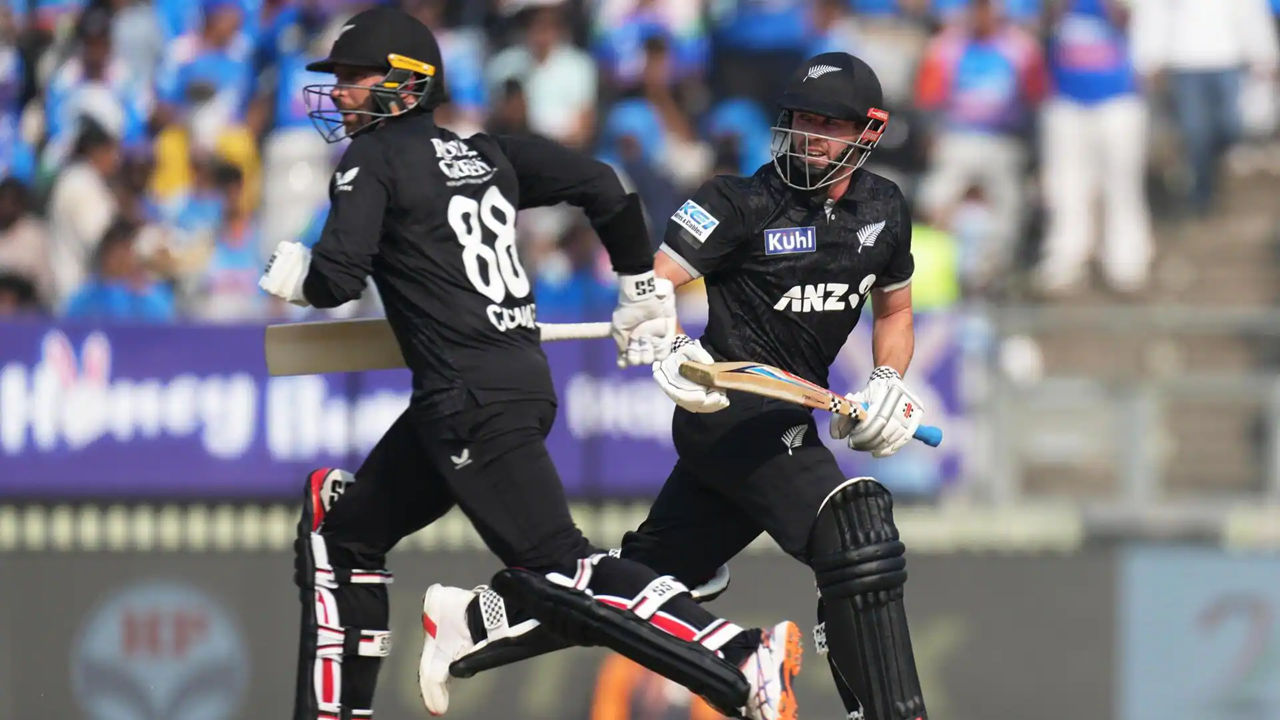
Devon Conway and Henry Nicholls make history as New Zealand’s first opening pair in 27 years
Conway-nicholls Historic Opening Stand Explained
Devon Conway and Henry Nicholls etched their names into New Zealand cricket history during the first One Day International against India at the BCA Stadium in Vadodara on Sunday, January 11. Their fluent and composed opening partnership not only gave the visitors a strong platform in a challenging away contest, but also ended a decades-long wait for a rare New Zealand batting milestone on Indian soil.
A solid start in challenging conditions
Opening the innings for New Zealand, Devon Conway and Henry Nicholls showed intent from the very first over. Indian conditions have historically been demanding for visiting openers, particularly in limited-overs cricket where swing with the new ball and spin in the middle overs can quickly derail batting line-ups. Against a disciplined Indian bowling attack, the Kiwi pair chose patience over aggression, focusing on strike rotation, soft hands, and calculated boundary-hitting.
Their partnership steadily grew in confidence. Rather than chasing quick runs, Conway and Nicholls assessed the pitch conditions, respected the bowlers, and capitalized on loose deliveries. The result was a 117-run stand for the first wicket, achieved in 21.4 overs, which laid a firm foundation for New Zealand’s innings.
Henry Nicholls’ measured half-century
Henry Nicholls played the role of the anchor during the partnership. Displaying classical strokeplay and sharp cricketing awareness, Nicholls reached 62 runs off 69 balls before his innings came to an end. His knock included well-timed boundaries and intelligent singles, ensuring the scoreboard kept ticking without unnecessary risks.
Nicholls’ dismissal came when he was caught behind by KL Rahul off the bowling of Harshit Rana. While his wicket brought an end to the opening stand, Nicholls had already done his job by seeing off the new ball and putting pressure back on the Indian bowlers.
Devon Conway’s composure at the top
At the other end, Devon Conway once again proved why he is considered one of New Zealand’s most reliable batters across formats. Calm, technically sound, and unflustered, Conway complemented Nicholls perfectly. He handled both pace and spin with ease, often stepping out to disrupt the bowlers’ lengths and finding gaps with precision.
Conway’s ability to build partnerships has been a key asset for New Zealand in recent years, and this innings was another example of his temperament in high-pressure situations. His presence ensured stability even as the Indian bowlers tried different angles and field placements.
A record-breaking partnership
By crossing the 100-run mark for the first wicket, Conway and Nicholls achieved something no New Zealand opening pair had managed in the 21st century against India in an ODI match played in India. This milestone instantly placed their partnership in the record books and highlighted its historical significance.
The achievement is even more notable given the frequency with which New Zealand and India have faced each other in limited-overs cricket over the past two decades. Despite several world-class openers representing New Zealand during this period, none had managed to register a 100-plus opening stand in Indian conditions until Conway and Nicholls did so in Vadodara.
Revisiting the last such feat in 1999
The last time a New Zealand opening pair added more than 100 runs for the first wicket in an ODI match against India in India was over two decades ago. On November 5, 1999, in Rajkot, Nathan Astle and Craig Spearman stitched together a 115-run opening partnership for the Stephen Fleming-led side.
That innings remains fondly remembered by New Zealand cricket fans. Astle scored a commanding 120 off 136 balls, while Spearman contributed a rapid 68 from just 44 deliveries. Their partnership came at a time when New Zealand cricket was establishing itself as a competitive force in world cricket.
Conway and Nicholls’ effort in Vadodara effectively revived memories of that historic stand, underlining how rare such achievements have been for New Zealand in India.
A rare milestone in ODI history
Overall, New Zealand openers have managed to add more than 100 runs for the first wicket against India in an ODI match played in India only three times. The first instance dates back to December 17, 1988, when Andrew Jones and John Wright put on a memorable 140-run opening stand.
In that match, Jones scored 57 off 85 balls while Wright added 70 from 96 deliveries. Their partnership set the benchmark for New Zealand opening pairs in India, a benchmark that remained untouched for over a decade until Astle and Spearman’s effort in 1999.
With Conway and Nicholls joining this elite list, the Vadodara partnership stands as only the third such instance in nearly four decades of ODI cricket between the two nations in India.
Context of India’s dominance at home
India’s strong home record in ODIs makes this achievement even more significant. Over the years, Indian bowlers have consistently exploited familiar conditions to trouble visiting teams. Early movement, strategic use of spin, and aggressive field placements have often resulted in quick breakthroughs, especially against opening batters.
For New Zealand, whose playing style traditionally emphasizes seam-friendly conditions back home, adapting to Indian pitches has required skill and discipline. Conway and Nicholls’ partnership reflected a well-prepared approach, combining technical adaptability with mental resilience.
Comparison with the all-time record
While Conway and Nicholls’ 117-run stand is historic for New Zealand, the overall record for the highest opening partnership against India in an ODI match played in India belongs to Australia’s Aaron Finch and David Warner. On January 14, 2020, at the Wankhede Stadium in Mumbai, the Australian duo added an unbeaten 258 runs in just 37.4 overs.
Finch and Warner’s partnership is widely regarded as one of the most dominant opening stands in ODI history. Their aggressive approach, relentless boundary-hitting, and complete control over the bowling attack showcased the peak of modern limited-overs batting.
When viewed against this backdrop, Conway and Nicholls’ innings may not match the sheer scale of the Australian record, but its importance lies in its historical context and rarity for New Zealand cricket.
Significance for New Zealand’s ODI future
This partnership could mark a turning point for New Zealand’s ODI strategy, particularly in subcontinental conditions. The team has often been praised for its adaptability and collective strength rather than individual brilliance, and Conway and Nicholls exemplified this philosophy.
A reliable opening combination is crucial in ODIs, especially during major tournaments. Strong starts not only ease pressure on the middle order but also allow teams to dictate the pace of the innings. The success of Conway and Nicholls in Vadodara may encourage team management to persist with this pairing in future high-profile series.
A morale boost ahead of key challenges
Beyond the record books, the partnership served as a significant morale booster for New Zealand. Performing well against India in India is a confidence-building achievement, particularly ahead of major ICC events and away tours.
For Nicholls, the half-century reinforced his value at the top of the order, while Conway’s composure reaffirmed his status as a dependable opener. Together, they demonstrated that New Zealand can compete toe-to-toe with top-tier teams even in challenging environments.
Conclusion
Devon Conway and Henry Nicholls’ 117-run opening partnership in the first ODI against India at Vadodara was more than just a productive start—it was a historic milestone. By becoming the first New Zealand opening pair in the 21st century to score a 100-plus opening stand against India in an ODI played in India, they ended a 27-year wait and joined an exclusive list of Kiwi openers.
Their effort bridged generations of New Zealand cricket, linking the achievements of Jones and Wright in 1988, Astle and Spearman in 1999, and now Conway and Nicholls in 2026. In a country where visiting teams rarely dominate, this partnership stands as a testament to patience, preparation, and class at the highest level of the game.
Related Posts