Delcy Rodríguez drops Colombian businessman Alex Saab, a close ally of President Maduro, from Venezuela’s cabinet.
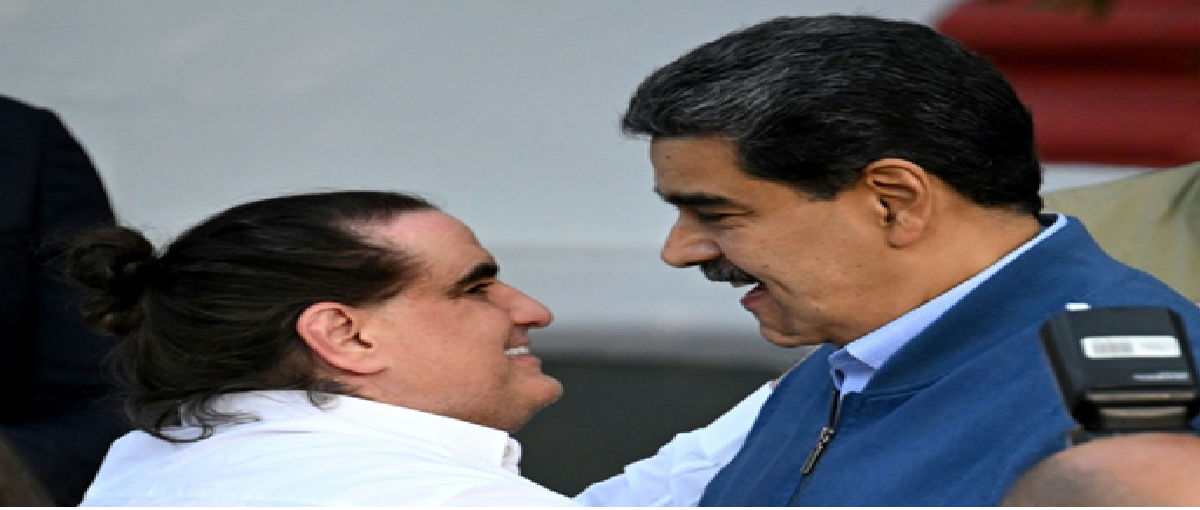
Delcy Rodríguez Removes Alex Saab from Cabinet in Sweeping Government Reshuffle
Caracas, Venezuela — Venezuela’s interim president, Delcy Rodríguez, has launched a sweeping reorganization of her government, announcing the merger of two major ministries and the removal of Colombian businessman Alex Saab, a close ally of ousted president Nicolás Maduro, from the cabinet. The changes mark one of the most significant shifts in Venezuela’s political leadership since Maduro was detained during a U.S.-led military operation earlier this month.
Rodríguez, who assumed power following Maduro’s arrest, made the announcement on Friday through her official Telegram channel. She confirmed that the Ministry of Industries and National Production would be merged with the Ministry of National Commerce, forming a new ministry that will be led by Luis Antonio Villegas, the former head of commerce. Saab, who had been serving as industries minister, was thanked publicly for his service and informed that he would “assume new responsibilities,” though no details were provided.
The cabinet overhaul is part of a broader effort by Rodríguez to stabilize the government, consolidate authority within key institutions, and distance her administration from figures closely associated with Maduro’s inner circle. The move comes amid heightened international attention, domestic uncertainty, and growing expectations that Venezuela may enter a period of political transition after more than a decade of economic crisis and authoritarian rule.
A Symbolic and Strategic Removal
The dismissal of Alex Saab is especially significant because of his controversial background and close relationship with Maduro. Born in Barranquilla, Colombia, to a Lebanese family, Saab rose from relative obscurity to become one of the most powerful businessmen linked to Venezuela’s government. Over the past decade, he was widely described by U.S. authorities and opposition leaders as a key financial operator for the Maduro administration, accused of facilitating international trade deals and helping Caracas bypass international sanctions.
Saab’s prominence grew after former Venezuelan prosecutor Luisa Ortega Díaz publicly accused him in 2017 of acting as a front man for government contracts tied to food imports, housing construction, and currency exchange schemes. Though Saab denied wrongdoing, his business dealings attracted scrutiny across Latin America, Europe, and the United States, where authorities alleged that he played a central role in money laundering operations linked to Venezuela’s state-run programs.
In 2020, Saab was arrested in Cape Verde while his plane was refueling during a flight from Iran to Venezuela. He was later extradited to the United States, where prosecutors charged him with conspiracy to launder hundreds of millions of dollars. Saab remained imprisoned in the U.S. from October 2021 until December 2023, when he was released as part of a diplomatic agreement and returned to Venezuela. In March 2024, U.S. prosecutors formally dropped the charges against him.
Despite his legal troubles, Saab was welcomed back by the Maduro government as a national hero, hailed as a “diplomat” who had been unjustly persecuted abroad. He was later appointed minister of industries and national production in October 2024, placing him in charge of policies central to Venezuela’s economic recovery efforts. His appointment was widely seen as a reward for loyalty and a signal that Maduro remained firmly in control of key economic portfolios.
Rodríguez’s decision to remove Saab from that post now signals a departure from that approach. Analysts say the move reflects an effort to weaken the political influence of Maduro’s closest allies while projecting a message of institutional reform to both domestic audiences and international observers.
Merger of Economic Ministries
Alongside Saab’s removal, Rodríguez announced the merger of two major government bodies — the Ministry of Industries and National Production and the Ministry of National Commerce — into a single entity. The new ministry will be led by Luis Antonio Villegas, who had already been serving as commerce minister since February 2024.
In her statement, Rodríguez said the restructuring would create “a new institutional framework” designed to improve coordination between industrial production, imports, exports, and domestic trade. She argued that combining the two ministries would reduce bureaucratic inefficiencies, streamline policy implementation, and support economic stabilization during a period of national uncertainty.
Villegas is regarded as a technocratic figure with experience in trade negotiations and domestic supply chains. Supporters of the move say placing him at the helm of the new ministry could help restore confidence among investors and business groups that have long criticized Venezuela’s fragmented economic governance structure. Critics, however, warn that bureaucratic consolidation alone will not address deeper problems such as inflation, currency instability, and declining industrial capacity.
Still, the ministry merger represents one of the most concrete structural reforms announced since Rodríguez took office and underscores her intent to reshape the economic management apparatus inherited from Maduro.
Political Transition After Maduro’s Arrest
Rodríguez’s rise to the presidency follows one of the most dramatic events in Venezuela’s modern political history. Earlier this month, U.S. forces carried out a surprise military operation in Caracas that resulted in the detention of Nicolás Maduro and several senior officials. The operation, which Washington justified on national security grounds, triggered immediate political upheaval inside Venezuela and shockwaves throughout Latin America.
Within days, Venezuela’s Supreme Tribunal of Justice and senior military leaders recognized Rodríguez, then serving as vice president, as the country’s interim leader. While the legal and constitutional basis of this transition remains contested, Rodríguez has moved quickly to establish her authority, reassure the armed forces, and signal continuity in state governance.
Her first days in office have been marked by an accelerated pace of executive decrees, public statements, and ministerial appointments. The reshuffle announced on Friday represents the most extensive set of changes so far and suggests that Rodríguez is determined to redefine the composition of power at the highest levels of government.
Although she has pledged to maintain stability and protect Venezuela’s sovereignty, Rodríguez has also spoken about the need for institutional renewal, economic recovery, and national reconciliation — language that contrasts with the confrontational tone that characterized much of Maduro’s presidency.
Broader Cabinet Changes
In addition to the ministry merger and Saab’s removal, Rodríguez announced several other key appointments aimed at consolidating control over strategic sectors.
She named Freddy Ñáñez as the new Minister of Ecosocialism, placing him in charge of environmental policy and natural resource management. Ñáñez previously served in communication and cultural roles and is considered a loyal figure within the governing coalition.
Aníbal Coronado was appointed as the new Minister of Transportation, tasked with overseeing Venezuela’s struggling public transport infrastructure and logistics networks. Meanwhile, Miguel Ángel Pérez Pirela was named Minister of Communication and Information, positioning him at the center of government messaging during a politically sensitive transition.
Rodríguez also made changes at the highest levels of the executive office. She appointed Captain Juan Escalona, a member of Maduro’s former security team, as minister of the Office of the Presidency, while former Central Bank president Calixto Ortega was named vice president of sectoral economics. These appointments suggest that Rodríguez is seeking to balance continuity with selective reform by retaining some experienced figures while sidelining others closely linked to Maduro’s personal power network.
In one of her most consequential moves, Rodríguez dismissed Major General Javier Marcano Tábata, Maduro’s longtime security chief, and replaced him with General Gustavo González López as commander of the Presidential Honor Guard and head of the General Directorate of Military Counterintelligence (DGCIM). The change effectively reshapes the leadership of Venezuela’s internal security apparatus — a critical institution for maintaining political stability and regime survival.
Reactions and Political Significance
The reshuffle has sparked intense debate within Venezuela and abroad. Supporters of Rodríguez say the changes demonstrate decisive leadership and a willingness to confront entrenched interests that had become synonymous with corruption and economic mismanagement under Maduro. They argue that removing figures like Saab, who symbolized opaque financial networks and international controversies, could improve Venezuela’s standing with foreign governments and multilateral institutions.
Opposition leaders, while cautiously welcoming the removal of some Maduro allies, remain skeptical of Rodríguez’s intentions. Several opposition figures described the reshuffle as cosmetic, arguing that many of the new appointees are longtime insiders with deep ties to the previous government. They warn that without meaningful political reforms — including electoral guarantees, judicial independence, and the release of political prisoners — changes in cabinet composition will not translate into genuine democratic transformation.
International observers have also expressed mixed reactions. Some Western governments view Saab’s removal as a positive step toward distancing the new administration from individuals accused of financial wrongdoing. Others remain cautious, noting that Rodríguez herself was a central figure in Maduro’s government and remains under U.S. sanctions.
Still, diplomats say the reshuffle may create space for renewed engagement between Caracas and international partners, particularly if the new government signals openness to economic reforms, humanitarian cooperation, and political dialogue.
Economic Context and Challenges Ahead
Rodríguez’s cabinet changes come at a time when Venezuela’s economy remains deeply fragile. Years of mismanagement, international sanctions, declining oil production, and currency collapse have left the country struggling with high inflation, poverty, and crumbling infrastructure. While limited economic stabilization occurred in recent years through partial dollarization and private-sector expansion, the broader structural crisis persists.
Alex Saab’s tenure as industries minister had been closely watched because of his history managing import networks and international trade deals. Some business leaders believed his experience navigating sanctions could help revive manufacturing and supply chains. Others argued that his controversial reputation discouraged foreign investment and reinforced perceptions of corruption within the state apparatus.
By replacing Saab with Villegas and merging economic ministries, Rodríguez appears to be signaling a shift toward technocratic governance and institutional coordination. Whether this translates into tangible improvements, however, remains uncertain. Analysts note that any meaningful economic recovery will require difficult decisions, including fiscal reform, transparency measures, and negotiations with international creditors — steps that have historically faced resistance within Venezuela’s political elite.
Saab’s Legacy and Uncertain Future
Although removed from the cabinet, Alex Saab remains a prominent figure within Venezuela’s political ecosystem. Rodríguez’s statement thanking him for his service and suggesting he will take on “new responsibilities” has fueled speculation about whether he will retain behind-the-scenes influence or be reassigned to diplomatic or advisory roles.
During his imprisonment in the United States, Saab became the centerpiece of an international campaign led by the Venezuelan government, which framed him as a political prisoner and symbol of resistance to U.S. sanctions. His wife, Camilla Fabri, an Italian citizen, emerged as a prominent spokesperson for his cause and now heads Misión Vuelta a la Patria, the state-run program responsible for repatriating Venezuelan migrants.
Despite maintaining a relatively low public profile throughout much of his business career, Saab’s rise to international prominence and subsequent fall from the cabinet illustrate the volatility of power within Venezuela’s political system — particularly during moments of transition.
Whether Saab’s removal signals a permanent sidelining or merely a temporary repositioning remains unclear. For now, however, his exit from a top ministerial post marks one of the clearest breaks Rodríguez has made with the Maduro era.
Security Restructuring and Control of the Armed Forces
Perhaps more significant than the economic reshuffle is Rodríguez’s restructuring of Venezuela’s security leadership. By replacing Maduro’s longtime security chief and appointing new commanders to the Presidential Honor Guard and DGCIM, Rodríguez has moved to secure loyalty within institutions critical to regime survival.
Control of the military and intelligence services has long been central to political power in Venezuela. Under Maduro, these institutions were tightly integrated into the governing structure, often rewarded with economic privileges and political influence. Rodríguez’s changes suggest she is recalibrating these relationships, possibly to consolidate her authority and reduce the risk of internal dissent.
Analysts say these moves may also reflect pressure from international actors seeking assurances about human rights practices and the future role of Venezuela’s security forces. Whether the new leadership will usher in reforms or simply continue existing policies under new management remains to be seen.
Regional and International Implications
The developments in Caracas are being closely monitored across Latin America and beyond. Venezuela’s political crisis has long had regional consequences, particularly through mass migration, energy markets, and diplomatic tensions. Rodríguez’s reshuffle, especially the removal of controversial figures like Saab, may influence how neighboring governments and global powers approach the new administration.
Some Latin American leaders have called for dialogue and restraint, urging respect for Venezuela’s sovereignty while emphasizing the need for political solutions. Others have expressed concern over the circumstances surrounding Maduro’s arrest and the role of U.S. military forces in Venezuelan territory.
For Washington, Rodríguez’s moves may be interpreted as an opening for cautious engagement, particularly if her administration signals willingness to negotiate on elections, sanctions relief, and economic reforms. However, U.S. officials have not yet publicly commented on Saab’s removal or the ministry merger.
Conclusion: A Government in Transition
Delcy Rodríguez’s decision to remove Alex Saab from the cabinet and merge two major ministries represents a defining moment in Venezuela’s post-Maduro political transition. The moves underscore her effort to consolidate power, reshape the governing elite, and signal a departure — at least symbolically — from some of the most controversial figures associated with the previous administration.
At the same time, the broader reshuffle highlights the complexities facing Venezuela’s interim leadership. Rodríguez must navigate internal power struggles, economic collapse, international pressure, and public expectations for change — all while operating in a deeply polarized political environment.
Whether these cabinet changes will lead to genuine reform or merely repackage existing power structures remains an open question. What is clear, however, is that Venezuela has entered a new and uncertain chapter, with Rodríguez’s early decisions setting the tone for what may become one of the most consequential transitions in the country’s modern history.
Related Posts