Death toll from Hurricane Melissa climbs as relief efforts face delays across parts of Jamaica
Hurricane Melissa Death Toll Rises as Jamaica Battles to Deliver Aid to Isolated Communities
Kingston, Jamaica — The death toll from the devastating Hurricane Melissa continues to climb, with at least 19 people confirmed dead in Jamaica and 30 more reported killed in Haiti, officials said on Friday, as rescue teams and aid convoys struggled to reach areas cut off by flooding, landslides, and debris.
Jamaica’s Information Minister Dana Morris Dixon said in a press briefing that entire towns and villages across the island’s western and central regions remain inaccessible, with reports of widespread destruction and marooned communities. “There are entire communities that seem to be marooned and areas that seem to be flattened,” Dixon said. “The scenes are devastating, and the scale of loss is immense.”
The Category 5 storm — one of the most powerful hurricanes ever recorded in the Caribbean — tore through Jamaica on Tuesday, packing winds reaching up to 185 miles per hour (295 km/h). It left behind a trail of destruction that has crippled infrastructure, flattened homes, and plunged the island into darkness.
Massive Power and Water Outages
Power remains out across most of the island, and many communities have been without running water for several days. Authorities said that the combination of downed power lines, uprooted trees, and impassable roads has made restoration efforts extremely difficult.
Across the island, thousands of people are attempting to salvage what little remains of their homes and belongings from mud and floodwaters. With food and clean water supplies dwindling, frustration is growing among residents waiting for assistance. “We are doing everything we can to get aid to every community, but access remains our biggest challenge,” said Dixon.
In the capital city, Kingston, electricity has been partially restored, allowing for limited commercial operations and communication services to resume. The island’s main airport, Norman Manley International Airport, has reopened and is now largely back to normal, providing a critical lifeline for incoming humanitarian assistance.
However, smaller regional airports — especially those located closer to the most affected western parishes — are still only partly operational. This has slowed down the delivery of aid to areas most in need.
Roads Destroyed, Access Blocked
The Jamaican military and aid agencies have been forced to transport emergency supplies by road, but many major routes remain blocked or heavily damaged. What used to be a one-hour journey from Mandeville to Black River in Saint Elizabeth Parish is now taking more than eight hours due to the extent of road destruction.
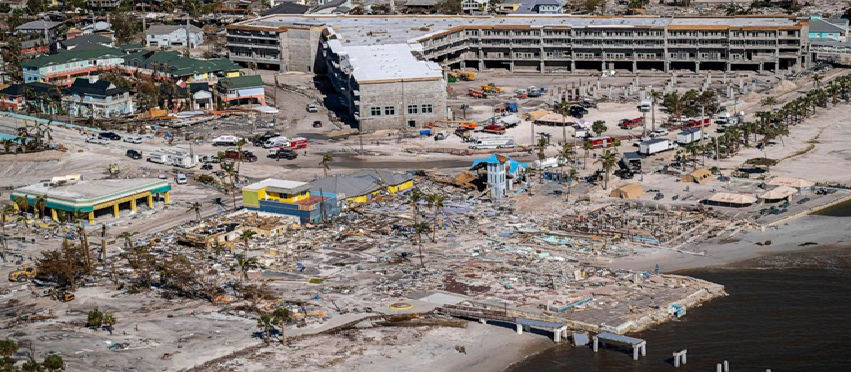
Relief convoys and army vehicles are navigating through fallen trees, broken utility poles, and washed-out bridges. Satellite imagery released on Thursday revealed that nearly all buildings in some western coastal villages were either severely damaged or completely destroyed.
Local residents described the aftermath as “apocalyptic.” Speaking to the BBC from White House in Westmoreland Parish, local resident Trevor “Zyanigh” Whyte said, “Words can’t explain how devastating it is. No one can reach their loved ones. Every road is blocked, every tree is down — you can’t even pass on a bicycle.”
Scenes of Destruction Across the Island
From Kingston to Montego Bay, the extent of damage worsens with every mile. Many homes have lost their roofs, and streets are lined with debris and personal belongings left to dry in the sun. On the roadside, residents can be seen drying mattresses and salvaging wood to rebuild temporary shelters.
The Jamaica Public Service Company (JPS) said crews are working around the clock to restore power, but progress has been slow due to inaccessible areas and safety concerns. “We have to clear the roads before we can erect new poles or reconnect lines,” a JPS spokesperson said.
Once lush and green, Jamaica’s mountainous landscape now appears barren — stripped of its foliage, with uprooted trees lying like matchsticks across the hillsides. Aerial images show flattened banana plantations, destroyed bridges, and submerged farmlands.
Haiti and Cuba Also Devastated
While Jamaica continues to grapple with the aftermath, neighboring Haiti has reported at least 30 deaths, many of them in the coastal town of Petit-Goâve, where a river overflowed its banks, sweeping away homes and vehicles.
Thousands have been displaced, with an estimated 15,000 people sheltering in more than 120 emergency centers across the country, according to Gregoire Goodstein, interim UN humanitarian coordinator for Haiti. “Entire neighborhoods remain inaccessible, and we still do not have a full picture of the devastation,” Goodstein said.
In Cuba, officials said that more than 3 million people were exposed to life-threatening conditions as Melissa lashed the island with torrential rain and winds. The UN’s resident coordinator in Cuba, Francisco Pichon, reported that 735,000 people were evacuated to safety before the storm hit. Although Cuba has so far reported no fatalities, authorities said that over 240 communities remain cut off due to flooding and landslides.
International Response and Relief Efforts
As the full extent of the disaster unfolds, governments and humanitarian organizations worldwide are stepping in to support recovery efforts across the Caribbean.
The World Food Programme (WFP) said it has begun coordinating logistics, cash assistance, and emergency supplies to affected nations — including Jamaica, Haiti, Cuba, and the Dominican Republic. “Our focus is on delivering life-saving food and restoring access to communities that have been completely isolated,” the agency said in a statement.
The United States announced that it is deploying a disaster response team to assist in search and rescue operations and to coordinate aid delivery. The US State Department confirmed that it is providing food, clean water, medical supplies, hygiene kits, and temporary shelters to the most affected areas.
Meanwhile, the United Kingdom said it is allocating an additional £5 million ($6 million) in humanitarian aid to the Caribbean, on top of the £2.5 million ($3.36 million) already committed earlier in the week. The new funding will support the distribution of emergency shelter kits, solar-powered lanterns, and clean water systems for people who have lost their homes or power supply.
“The UK stands with our Caribbean partners in this moment of immense tragedy,” said a spokesperson for the British Foreign Office. “We are working closely with regional authorities to ensure that aid reaches those in greatest need as quickly as possible.”
The UK is also arranging evacuation flights for stranded British nationals unable to leave on commercial aircraft, as several local airports remain damaged or closed.
Bermuda Braces for Impact
As Jamaica, Cuba, and Haiti begin to assess the damage, Bermuda prepared for its own encounter with Hurricane Melissa. The Bermuda Weather Service forecasted that the storm would pass near the British Overseas Territory as a Category 2 hurricane on Thursday night.
Government offices and schools were ordered to close until Friday afternoon, and residents were advised to remain indoors until authorities issued an official “All Clear.” “Residents are urged to stay off the roads so that government crews can safely assess and clear debris,” officials said in a public alert.
Humanitarian Crisis and Long Road to Recovery
In the hardest-hit regions of western Jamaica — including Hanover, Westmoreland, and St. Elizabeth — emergency crews say the situation remains dire. Communication lines are down, hospitals are operating on limited backup power, and clean drinking water is scarce.
Non-governmental organizations have reported that some communities are surviving on shared food reserves, with many families forced to boil contaminated floodwater for drinking.
“The humanitarian situation is deteriorating quickly,” said Sarah McAllister, a field coordinator with the International Federation of Red Cross and Red Crescent Societies (IFRC). “People are desperate for food and clean water. Many haven’t received any assistance yet because roads are still blocked or washed away.”
Jamaican Prime Minister Andrew Holness has declared a national emergency and appealed for international support, calling Hurricane Melissa “one of the most catastrophic natural disasters in Jamaica’s modern history.”
“Our resilience as a people will be tested,” Holness said in a televised address. “But we will rebuild stronger. We are already mobilizing all available resources — local and international — to restore power, reopen roads, and ensure that every Jamaican receives help.”
Economic Impact and Rebuilding Challenges
Preliminary estimates suggest that the cost of rebuilding infrastructure and homes in Jamaica could run into billions of dollars. The tourism industry — a vital pillar of the island’s economy — has been hit particularly hard, with dozens of resorts and hotels in Montego Bay and Negril reporting significant structural damage.
Agriculture, too, has suffered a severe blow. Jamaica’s Ministry of Agriculture reported widespread destruction of banana, sugarcane, and coffee plantations. “It will take months, if not years, for our farmers to recover from this,” said Agriculture Minister Floyd Green.
International economists have warned that the hurricane could slow Jamaica’s GDP growth for the year, with ripple effects across the Caribbean region.
Hope Amid Despair
Despite the destruction, scenes of solidarity are emerging across the island. Volunteers, local businesses, and community groups are organizing relief drives, collecting donations, and distributing meals to affected families. Radio stations have opened hotlines to connect missing persons with relatives.
“We’ve been through hurricanes before, but this one was different,” said Elaine Roberts, a resident of Montego Bay. “Still, Jamaicans are strong. We help each other. We’ll rebuild — brick by brick.”
As recovery efforts continue, meteorologists warn that the 2025 Atlantic hurricane season is expected to be one of the most active in recent years, driven by warmer ocean temperatures and shifting climate patterns.
For now, the focus remains on saving lives and rebuilding shattered communities — a daunting task in a region already grappling with economic and environmental challenges.
Related Posts