Confirmed Final Squads Announced for ICC Men’s T20 World Cup 2026
Confirmed Final Squads Announced for ICC Men’s T20 World Cup 2026
The cricketing world has officially turned its attention to the ICC Men’s T20 World Cup 2026, with participating nations announcing their final squads ahead of the tournament. This milestone marks the final phase of preparation for teams hoping to lift one of the sport’s most prestigious trophies. With star players returning from injuries, young talents earning their first call-ups, and tactical selections shaping team strategies, the confirmed squads offer a fascinating glimpse into how nations plan to approach the global spectacle.
The 2026 edition of the T20 World Cup is expected to be one of the most competitive tournaments in the event’s history. As cricket continues to grow worldwide, more nations are developing strong T20 sides, leading to tighter contests and unpredictable outcomes. The announcement of final squads not only fuels excitement among fans but also sets the tone for rivalries, tactical battles, and individual performances that could define the tournament.
Importance of Squad Announcements
Final squad announcements are more than just lists of names. They represent months — sometimes years — of planning by selectors, coaches, and team management. Each inclusion or exclusion reflects current form, fitness, experience, and adaptability to the fast-paced demands of T20 cricket.
Unlike longer formats, T20 cricket requires players who can make immediate impact. A batter may only face 15–20 deliveries, a bowler might have just four overs, and fielding standards must be exceptional throughout. Therefore, squads are typically built around:
- Explosive batters capable of quick scoring
- Versatile all-rounders who balance the XI
- Specialist death-over bowlers
- Athletic fielders who save runs and create chances
The final squads also reflect team balance, adaptability to playing conditions, and contingency planning for injuries or poor form.
Tournament Context and Expectations
The ICC Men’s T20 World Cup 2026 arrives at a time when T20 leagues across the world have revolutionized player development. From the Indian Premier League to the Big Bash League, Caribbean Premier League, and The Hundred, players now enter international tournaments with vast experience in high-pressure situations. This has elevated the quality of competition, ensuring that even traditionally weaker sides can challenge the established powerhouses.
With global audiences expected to reach record numbers, cricket boards have been under immense pressure to field their strongest possible teams. The final squad announcements confirm that nations are taking no chances, blending seasoned veterans with fearless youngsters in search of the perfect tournament combination.
Key Trends in Squad Selections
A closer look at the confirmed squads reveals several common trends across teams:
1. Rise of Multi-Skilled Players
Teams increasingly favor players who can contribute in more than one discipline. All-rounders who can bat aggressively and bowl useful overs provide tactical flexibility, especially in tight matches where matchups and substitutions become crucial.
2. Emphasis on Power-Hitting
Modern T20 cricket prioritizes boundary-hitting from ball one. Many squads feature multiple batters with strike rates well above 140, ensuring teams can maintain scoring momentum throughout the innings.
3. Specialized Death Bowlers
The last five overs often decide matches. As a result, bowlers with proven yorker accuracy, slower-ball variations, and mental toughness under pressure have been prioritized.
4. Youth and Energy
Several teams have included young, fearless players who have impressed in domestic leagues and franchise tournaments. These players often bring athletic fielding, innovative strokeplay, and fresh approaches to pressure situations.
Big Names and Star Players
The confirmed squads include many of the biggest names in world cricket. Established stars, some of whom have already lifted T20 World Cup trophies, will once again take center stage. Their leadership, experience, and ability to perform in knockout matches remain invaluable assets for their teams.
At the same time, several iconic players are participating in what may be their final ICC tournaments. This adds emotional significance to the event, as fans hope to see legends end their international careers on a high. Conversely, the emergence of new stars offers a glimpse into cricket’s future, with many young players eager to announce themselves on the world stage.
Team-by-Team Strategic Outlook
While official squad lists differ in composition and philosophy, most teams appear to have adopted balanced approaches that suit modern T20 cricket. Here’s a breakdown of how different types of teams are shaping their squads:
Traditional Powerhouses
Teams with strong cricketing histories have leaned on experienced campaigners while integrating younger talent. Their squads typically feature:
- Proven top-order batters who can anchor innings
- Hard-hitting middle-order finishers
- Quality spin and pace combinations
- Reliable wicketkeepers who offer batting depth
These teams will aim to control matches through structured planning, disciplined bowling, and experienced leadership.
Emerging Contenders
Several teams traditionally considered underdogs have named bold and exciting squads. They often rely on:
- Fearless stroke-makers
- Express fast bowlers
- Creative spinners
- High-energy fielding units
Such teams thrive on momentum and unpredictability, making them dangerous opponents, particularly in group-stage matches.
Associate and Developing Nations
For newer cricketing nations, squad announcements represent milestones in their development journey. Many have selected young players who have benefited from exposure to global leagues and training programs. Their goal is not only to compete but to establish credibility, gain experience, and inspire future generations of cricketers.
Leadership Choices and Captaincy Decisions
One of the most scrutinized aspects of squad announcements is captaincy. Leadership in T20 cricket differs significantly from longer formats. Captains must make quick tactical decisions, manage bowling rotations precisely, and adjust field placements rapidly.
Several teams have backed experienced international leaders, while others have entrusted younger captains with the responsibility of guiding the side. In some cases, selectors have chosen bold leadership transitions, signaling long-term planning beyond the tournament itself.
Vice-captain selections also play a key role, offering support and continuity in case of injuries or tactical reshuffles.
Notable Omissions and Controversies
Every squad announcement generates debate, and the T20 World Cup 2026 selections have been no exception. Some high-profile players have missed out due to:
- Poor recent form
- Injury concerns
- Tactical mismatch with team strategy
- Increased competition for limited spots
Fans and experts alike have discussed these omissions extensively, particularly when popular or experienced players are excluded. However, selectors often emphasize current performance and team balance over reputation, highlighting the evolving nature of modern cricket selection policies.
Impact of Injuries and Fitness Management
Fitness has played a significant role in shaping final squads. With congested international calendars and intense franchise leagues, player workload management has become critical. Several teams waited until the final moment to confirm their squads, allowing injured players additional time to recover.
Medical staff, physiotherapists, and conditioning coaches now play a more influential role than ever before, ensuring players enter tournaments at peak physical readiness. Teams have also named reserve players and traveling substitutes to prepare for potential late injuries or illnesses during the competition.
Role of Spin Bowling in 2026 Conditions
Although conditions vary by venue, spin bowling continues to play a decisive role in T20 cricket, particularly in middle overs where matches often swing. Many squads include multiple spinners, offering variety in pace, trajectory, and spin direction.
Leg-spinners, in particular, remain prized for their wicket-taking ability, while finger spinners provide control and economy. Several teams have also included spinning all-rounders who strengthen batting depth while offering bowling flexibility.
Fast Bowling Arsenal and Death Overs Strategy
Fast bowling units in the confirmed squads emphasize variation and execution. Rather than relying solely on pace, teams have prioritized bowlers skilled in:
- Yorkers
- Slower balls
- Cutters
- Wide-line tactics
The final overs — often referred to as the “death overs” — demand calmness under pressure and tactical precision. Teams with reliable death bowlers enjoy a significant advantage, especially in high-scoring encounters where margins are razor-thin.
Batting Line-Ups: Anchors and Finishers
Modern T20 teams increasingly construct batting orders around defined roles:
- Powerplay aggressors who attack early
- Middle-order stabilizers who rotate strike and manage risk
- Finishers who accelerate dramatically in the final overs
The confirmed squads show careful planning around these roles. Many teams feature flexible batters capable of moving up or down the order depending on match situations, pitch conditions, and opposition strategies.
Fielding Standards and Athleticism
Fielding has become a decisive factor in T20 cricket. Matches are often won or lost on small margins — a dropped catch, misfield, or missed run-out can swing momentum instantly. Recognizing this, selectors have increasingly favored athletic players who offer speed, agility, and strong throwing arms.
Several squads showcase fielding units that rival traditional powerhouses, reflecting cricket’s evolution into a more physically demanding sport.
Psychological Preparedness and Tournament Pressure
Beyond skills and fitness, mental strength is critical in global tournaments. Players must cope with intense scrutiny, massive crowds, and the pressure of representing their nations. Many teams now employ sports psychologists and performance coaches to help players manage expectations, remain composed in high-pressure situations, and recover quickly from setbacks.
The inclusion of experienced campaigners alongside young players reflects a balance between calm leadership and fearless innovation — a combination essential for success in major tournaments.
Fan Reactions and Global Anticipation
The announcement of final squads has sparked excitement across cricketing nations. Social media platforms have been flooded with reactions, debates, and predictions, as fans analyze every selection and speculate on possible playing XIs.
Supporters have expressed joy at the return of injured stars, pride in young players earning national recognition, and disappointment over controversial omissions. This engagement highlights cricket’s enduring popularity and emotional connection with fans worldwide.
Ticket sales, merchandise demand, and broadcast interest have surged following the squad announcements, underscoring the tournament’s massive commercial and cultural impact.
Media Analysis and Expert Opinions
Cricket experts, former players, and analysts have provided detailed breakdowns of the squads, identifying strengths, weaknesses, and potential match-winners. Common themes in expert analysis include:
- The depth of batting line-ups
- Quality of bowling attacks
- Flexibility in team combinations
- Leadership experience
- Bench strength and adaptability
Many analysts believe the 2026 tournament could be one of the most competitive ever, with multiple teams capable of lifting the trophy. Unlike earlier eras dominated by a few nations, modern T20 cricket thrives on unpredictability, making the event more exciting for fans and broadcasters alike.
Preparation Camps and Final Warm-Ups
With squads now confirmed, teams will shift focus entirely to match preparation. Training camps, warm-up games, and practice matches will play a crucial role in fine-tuning strategies and building team chemistry.
Coaches will experiment with batting orders, bowling rotations, and fielding placements, using practice matches to identify the most effective combinations. Players will also adapt to playing conditions, climate, and pitch behavior to ensure peak readiness when the tournament begins.
What This Means for the Tournament
The confirmation of final squads signals the start of the most intense phase of the T20 World Cup cycle. Every selection decision now carries consequences, as there is little room for change once the competition begins.
Teams with strong squad depth enjoy greater tactical freedom, while those reliant on a few key players face higher risk. Ultimately, success will depend not only on talent but on teamwork, adaptability, resilience, and the ability to seize critical moments.
Conclusion
The announcement of final squads for the ICC Men’s T20 World Cup 2026 represents a defining moment in the lead-up to one of cricket’s most anticipated global events. Each squad reflects months of evaluation, strategic planning, and performance analysis, blending experience with youth and skill with athleticism.
As teams prepare to battle for supremacy, fans across the world eagerly await the drama, excitement, and unforgettable moments that only a T20 World Cup can deliver. From thrilling last-over finishes to breakout performances by emerging stars, the 2026 tournament promises to showcase the very best of modern cricket.
With the squads now confirmed, the stage is set. The countdown to cricket’s grand T20 spectacle has truly begun — and the world is watching.
Nineteen of the twenty teams competing in the ICC Men’s T20 World Cup 2026 in India and Sri Lanka have officially announced their squads. Australia confirmed that Pat Cummins and Matthew Short will miss the tournament due to injuries, while Sri Lanka is yet to reveal its final lineup.
Below are the group-wise squads:
Group A
India:
Suryakumar Yadav (c), Abhishek Sharma, Tilak Varma, Sanju Samson, Shivam Dube, Ishan Kishan, Hardik Pandya, Arshdeep Singh, Jasprit Bumrah, Harshit Rana, Varun Chakaravarthy, Kuldeep Yadav, Axar Patel, Washington Sundar, Rinku Singh
USA:
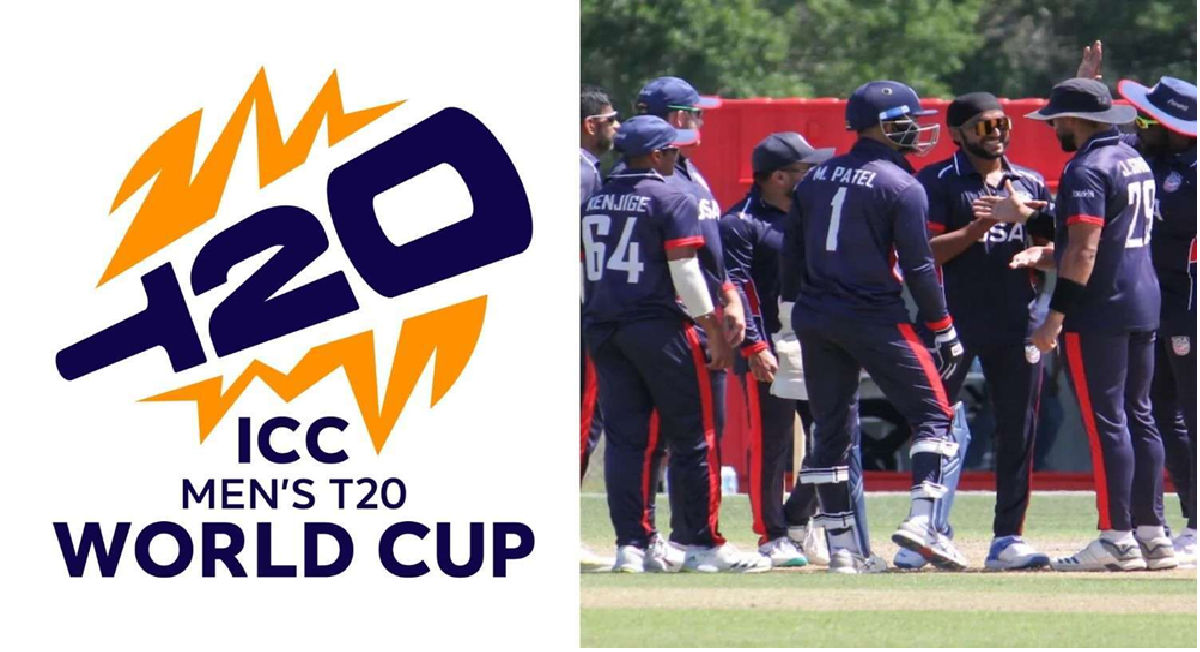
Monank Patel (c), Jessy Singh, Andries Gous, Shehan Jayasuriya, Milind Kumar, Shayan Jahangir, Saiteja Mukkamala, Sanjay Krishnamurthi, Harmeet Singh, Nosthush Kenjige, Shadley van Schalkwyk, Saurabh Netravalkar, Ali Khan, Mohammad Mohsin, Shubham Ranjane
Namibia:
Gerhard Erasmus (c), Zane Green, Bernard Scholtz, Ruben Trumpelmann, JJ Smit, Jan Frylinck, Louren Steenkamp, Malan Kruger, Nicol Loftie-Eaton, Jack Brassell, Ben Shikongo, JC Balt, Dylan Leicher, WP Myburgh, Max Heingo
Reserve: Alexander Volschenk
Netherlands:
Scott Edwards (c), Colin Ackermann, Noah Croes, Bas de Leede, Aryan Dutt, Fred Klaassen, Kyle Klein, Michael Levitt, Zach Lion-Cachet, Max O’Dowd, Logan van Beek, Timm van der Gugten, Roelof van der Merwe, Paul van Meekeren, Saqib Zulfiqar
Pakistan:
Salman Ali Agha (c), Abrar Ahmed, Babar Azam, Faheem Ashraf, Fakhar Zaman, Khawaja Nafay, Mohammad Nawaz, Mohammad Salman Mirza, Naseem Shah, Sahibzada Farhan, Saim Ayub, Shaheen Shah Afridi, Shadab Khan, Usman Khan, Usman Tariq
Group B
Australia:
Mitchell Marsh (c), Xavier Bartlett, Cooper Connolly, Tim David, Ben Dwarshuis, Cameron Green, Nathan Ellis, Josh Hazlewood, Travis Head, Josh Inglis, Matthew Kuhnemann, Glenn Maxwell, Matthew Renshaw, Marcus Stoinis, Adam Zampa
Sri Lanka:
Final squad yet to be announced
Zimbabwe:
Sikandar Raza (c), Brian Bennett, Ryan Burl, Graeme Cremer, Bradley Evans, Clive Madande, Tinotenda Maposa, Tadiwanashe Marumani, Wellington Masakadza, Tony Munyonga, Tashinga Musekiwa, Blessing Muzarabani, Dion Myers, Richard Ngarava, Brendan Taylor
Ireland:
Paul Stirling (c), Mark Adair, Ross Adair, Ben Calitz, Curtis Campher, Gareth Delany, George Dockrell, Matthew Humphreys, Josh Little, Barry McCarthy, Harry Tector, Tim Tector, Lorcan Tucker, Ben White, Craig Young
Oman:
Jatinder Singh (c), Vinayak Shukla, Mohammad Nadeem, Shakeel Ahmad, Hammad Mirza, Wasim Ali, Karan Sonavale, Shah Faisal, Nadeem Khan, Sufyan Mehmood, Jay Odedra, Shafiq Jan, Ashish Odedara, Jiten Ramanandi, Aamir Kaleem
Group C
England:
Harry Brook (c), Rehan Ahmed, Jofra Archer, Tom Banton, Jacob Bethell, Jos Buttler, Sam Curran, Liam Dawson, Ben Duckett, Will Jacks, Jamie Overton, Adil Rashid, Phil Salt, Josh Tongue, Luke Wood
West Indies:
Shai Hope (c), Shimron Hetmyer, Johnson Charles, Roston Chase, Matthew Forde, Jason Holder, Akeal Hosein, Shamar Joseph, Brandon King, Gudakesh Motie, Rovman Powell, Sherfane Rutherford, Quentin Sampson, Jayden Seales, Romario Shepherd
Italy:
Wayne Madsen (c), Marcus Campopiano, Gian Piero Meade, Zain Ali, Ali Hasan, Crishan Jorge Kalugamage, Harry Manenti, Anthony Mosca, Justin Mosca, Syed Naqvi, Benjamin Manenti, Jaspreet Singh, JJ Smuts, Grant Stewart, Thomas Draca
Nepal:
Rohit Paudel (c), Dipendra Singh Airee, Sandeep Lamichhane, Kushal Bhurtel, Aasif Sheikh, Sundeep Jora, Aarif Sheikh, Basir Ahamad, Sompal Kami, Karan KC, Nandan Yadav, Gulshan Jha, Lalit Rajbanshi, Sher Malla, Lokesh Bam
Scotland:
Richie Berrington (c), Tom Bruce, Matthew Cross, Bradley Currie, Oliver Davidson, Chris Greaves, Zainullah Ihsan, Michael Jones, Michael Leask, Finlay McCreath, Brandon McMullen, George Munsey, Safyaan Sharif, Mark Watt, Bradley Wheal
Travelling reserves: Jasper Davidson, Jack Jarvis
Non-travelling reserves: Mackenzie Jones, Chris McBride, Charlie Tear
Group D
South Africa:
Aiden Markram (c), Corbin Bosch, Dewald Brevis, Quinton de Kock, Marco Jansen, George Linde, Keshav Maharaj, Kwena Maphaka, David Miller, Lungi Ngidi, Anrich Nortje, Kagiso Rabada, Ryan Rickelton, Jason Smith, Tristan Stubbs
New Zealand:
Mitchell Santner (c), Finn Allen, Michael Bracewell, Mark Chapman, Devon Conway, Jacob Duffy, Lockie Ferguson, Matt Henry, Kyle Jamieson, Daryl Mitchell, James Neesham, Glenn Phillips, Rachin Ravindra, Tim Seifert, Ish Sodhi
Afghanistan:
Rashid Khan (c), Noor Ahmad, Abdullah Ahmadzai, Sediqullah Atal, Fazal Haq Farooqi, Rahmanullah Gurbaz, Naveen-ul-Haq, Mohammad Ishaq Rahimi, Shahidullah Kamal, Mohammad Nabi, Gulbadin Naib, Azmatullah Omarzai, Mujeeb Ur Rahman, Darwish Rasooli, Ibrahim Zadran
Reserves: AM Ghazanfar, Ijaz Ahmad Ahmadzai, Zia Ur Rahman Sharifi
Canada:
Dilpreet Bajwa (c), Ajayveer Hundal, Ansh Patel, Dilon Heyliger, Harsh Thaker, Jaskarandeep Singh, Kaleem Sana, Kanwarpal Tathgur, Navneet Dhaliwal, Nicholas Kirton, Ravinderpal Singh, Saad Bin Zafar, Shivam Sharma, Shreyas Movva, Yuvraj Samra
UAE:
Muhammad Waseem (c), Alishan Sharafu, Aryansh Sharma, Dhruv Parashar, Haider Ali, Harshit Kaushik, Junaid Siddique, Mayank Kumar, Muhammad Arfan, Muhammad Farooq, Muhammad Jawadullah, Muhammad Zohaib, Rohid Khan, Sohaib Khan, Simranjeet Singh
Related Posts