Carney Warns Old World Order Is Over in Davos Speech
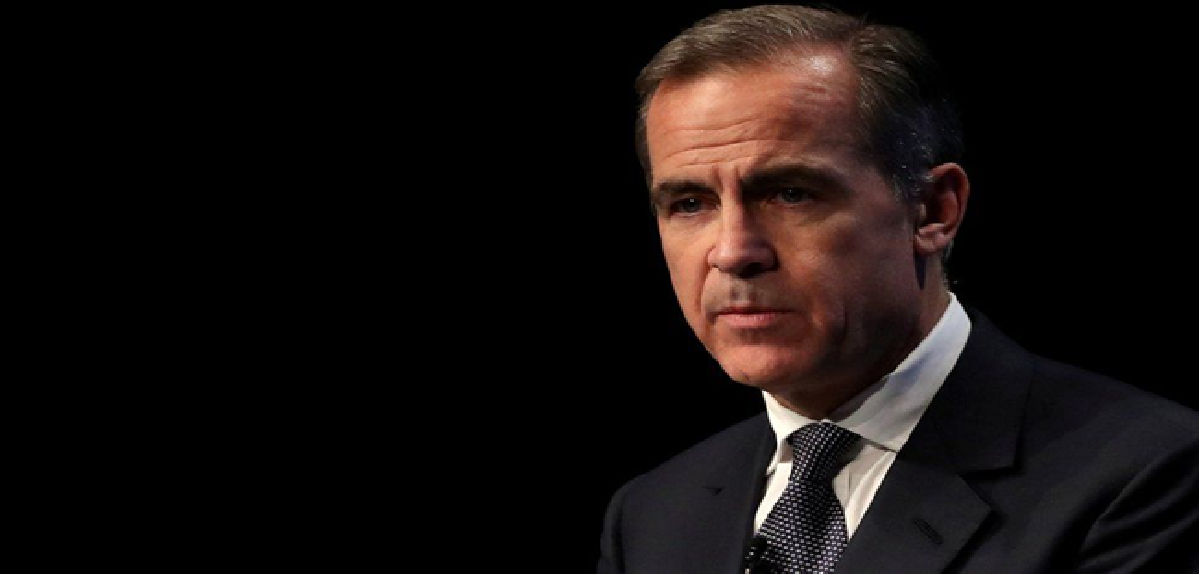
Carney’s Davos Warning: Middle Powers Must Stop ‘Living Within a Lie’ and Rebuild the World Order
When Canadian Prime Minister Mark Carney walked onto the main stage of the World Economic Forum in Davos, Switzerland, he was not expected to deliver a geopolitical warning. Yet what unfolded was a strikingly direct lecture on power, honesty, and strategy in a world he described as fundamentally fractured. Before an audience of global business leaders, ministers, and diplomats, Carney argued that the old “rules-based order” was not simply eroding — it had already collapsed — and that countries like Canada could no longer pretend otherwise.
His remarks amounted to one of the clearest articulations yet of a new foreign policy doctrine for middle powers living between the gravitational pulls of the United States, China, and Russia. The speech, delivered partly in French before switching back to English, diagnosed the underlying disorder driving everything from trade wars to sanctions to security crises: the return of great-power rivalry and the fading legitimacy of institutions built after the Second World War.
Carney did not cloak his argument in the usual euphemisms of diplomatic multilateralism. Instead, he bluntly warned that international politics had reverted to a competition in which “the strong do what they can, and the weak suffer what they must,” invoking the famous aphorism attributed to the ancient historian Thucydides. The message was clear: Canadians and similar countries could no longer rely on global norms to restrain the powerful.
A Speech Set Against Geopolitical Stress
The image of Davos — the ultimate networking retreat for global elites — sat in stark contrast to the tensions outside the mountain resort. Diplomatic relations among the world’s largest states were frayed. U.S. President Donald Trump had spent months threatening allies with tariffs, questioning NATO commitments, and even floating the idea of purchasing Greenland from Denmark, a NATO member, prompting disbelief and irritation in European capitals.
Beyond diplomatic spectacle, Washington and Beijing were engaged in a grinding struggle over trade, technology standards, and global supply chains. Russia, meanwhile, had sharpened its military posture and cyber operations. For many Western states, the belief that international institutions could moderate such rivalries had come under strain.
It was against this backdrop that Carney framed his argument: it was no longer enough for middle powers to “go along to get along.” Compliance might avoid immediate conflict, but it would not guarantee safety. “Well, it won’t,” Carney said flatly.
The Havel Analogy: Power Sustained Through Performance
To explain why countries had tolerated a dysfunctional global bargain for so long, Carney turned to a surprising source: the Czech dissident writer Václav Havel and his 1978 essay “The Power of the Powerless.” Havel’s example featured a small-town greengrocer who places a sign in his window reading “Workers of the world unite.” The grocer does not believe the slogan, and nor does anyone else, yet everyone displays it to avoid trouble and to signal cooperation with the system.
The communist regime Havel described persisted not because citizens believed in it, but because they performed belief long enough to make dissent invisible. Carney repurposed the analogy for international politics: middle powers like Canada had been “living within a lie” by pretending the rules-based order was intact and equitable when they privately knew its flaws. The United States, as hegemon, enforced global rules inconsistently; trade agreements benefited some economies disproportionately; and international law was applied with varying levels of severity depending on the identity of the accused and the victim.
Despite these disparities, the arrangement produced benefits for the Western middle powers — predictable markets, open sea lanes, collective security via NATO, and access to the U.S. financial system. In exchange, they participated in the ritual of defending the so-called “rules-based order” in speeches, communiqués, and conferences.
‘This Bargain No Longer Works’
The turning point, in Carney’s telling, was not a single event but a series of shocks: the global financial crisis of 2008, the COVID-19 pandemic, supply chain shortages, energy disruptions, and now overt geopolitical coercion. Together, these crises revealed both the fragility and the manipulability of economic interdependence. “Great powers have begun using economic integration as weapons,” he said, naming tariffs, financial infrastructure, and supply chains as tools of leverage and punishment.
Carney’s indictment was aimed at Washington and Beijing alike. The two largest economies in the world had defined a new form of conflict that fell short of war but inflicted real costs. Sanctions could disable banks; export controls could kneecap industries; and information controls could steer global technology ecosystems. For middle powers, dependence on either giant created vulnerabilities.
Where earlier foreign policy doctrines had preached neutrality, hedging, or strategic patience, Carney suggested that none of these were adequate. The rupture in world politics was not a temporary disruption to be weathered, but a structural break requiring adaptation.
The End of Nostalgia as Strategy
An important theme in Carney’s speech was the argument that nostalgia — the longing for a restored post-Cold War order — had become a form of denial. He argued that neither Washington nor Beijing was prepared to return to the arrangement that dominated the 1990s and early 2000s, when globalization and free trade were presented as universal goods. The United States was now openly transactional, demanding concessions from allies; China was assertive and strategic, leveraging markets and finance to secure influence abroad.
Carney warned that if middle powers continued to act as if the old system were still in place, they risked becoming mere arenas of competition for the great powers to fight over. Under such conditions, avoiding offense becomes indistinguishable from surrender.
The solution he proposed was not isolationism but collective agency. Middle powers could regain influence by cooperating with one another to build new networks of economic and diplomatic resilience. The objective was not to replace American leadership or Chinese capacity, but to rebalance leverage so that neither superpower could dictate terms unilaterally.
Toward a New Middle-Power Strategy
Carney’s political instincts on the global stage draw from his experience as Governor of the Bank of Canada and later the Bank of England, where he navigated crises through coalitions of regulators. The model he outlined at Davos applied similar principles to geopolitics: reduce single-point dependencies, diversify trade and technology, pool resources for collective security, and frame cooperation around values rather than convenience.
In concrete terms, this could mean new defense partnerships, diversified supply chains away from China, reduced reliance on the U.S. financial system, or enhanced coordination with Europe, Australia, Japan, and South Korea. It echoed the logic behind recent middle-power agreements like the Indo-Pacific frameworks and economic “de-risking.”
For Carney, such strategy is both practical and ethical. The speech stressed that values such as dignity, sovereignty, and territorial integrity must not be treated as luxuries of peacetime diplomacy. If middle powers abandoned them, the moral vacuum would be filled by might alone.
Why Davos Matters as a Venue
Davos is often mocked as a gathering of elites issuing declarations from Swiss mountaintops, yet Carney chose it deliberately. The World Economic Forum’s audience includes the financiers, policymakers, and corporate strategists who shape supply chains and capital flows. If economic tools had become weapons, then economic actors were part of the battlefield. Carney’s message that “companies and countries must take their signs down” was aimed as much at corporate compliance with major powers as at governments.
Furthermore, Davos remains one of the few venues where representatives of rival states and industries engage directly. By presenting the middle-power thesis there, Carney signaled a vision of diplomacy not as a hierarchy but as a network.
The Broader Implications of the Davos Doctrine
The real significance of Carney’s intervention lies not in its diagnosis but in its prescription. If the old world order is truly over, then the next question becomes: who writes the rules of the next one? Carney argued that relinquishing that role to Washington and Beijing would be a form of strategic passivity. The alternative — collaboration among middle powers — would be slower, messier, and less dramatic than Cold War blocs, but potentially more stable in a multipolar world.
Whether that vision is realistic remains to be seen. Middle powers vary widely in interests, geography, and threat perceptions. Some depend on U.S. security guarantees; others rely heavily on Chinese trade; still others prefer autonomy above all. Yet the logic Carney articulated reflects an emerging consensus in capitals from Ottawa to Seoul to Brussels: survival in the new age of power politics requires agency, not supplication.
Conclusion
Prime Minister Carney’s Davos speech marked a rhetorical turning point in Canada’s foreign policy and a broader warning to states caught between superpowers. By invoking Havel’s image of citizens living within a lie, Carney urged middle powers to confront uncomfortable truths about the decay of global norms and the inadequacy of old habits. His message was that the world order is not merely fading — it has already ruptured — and the future will be written by those willing to acknowledge that reality.
Whether history proves him right will depend not on speeches delivered in alpine conference halls, but on the decisions nations make in parliaments, boardrooms, and foreign ministries as the new geopolitics unfolds.
Related Posts