BNP Returns to Power After 20 Years Following 2024 Protests
Bangladesh Nationalist Party Set to Form Government After 20 Years; Tarique Rahman Poised to Lead Bangladesh
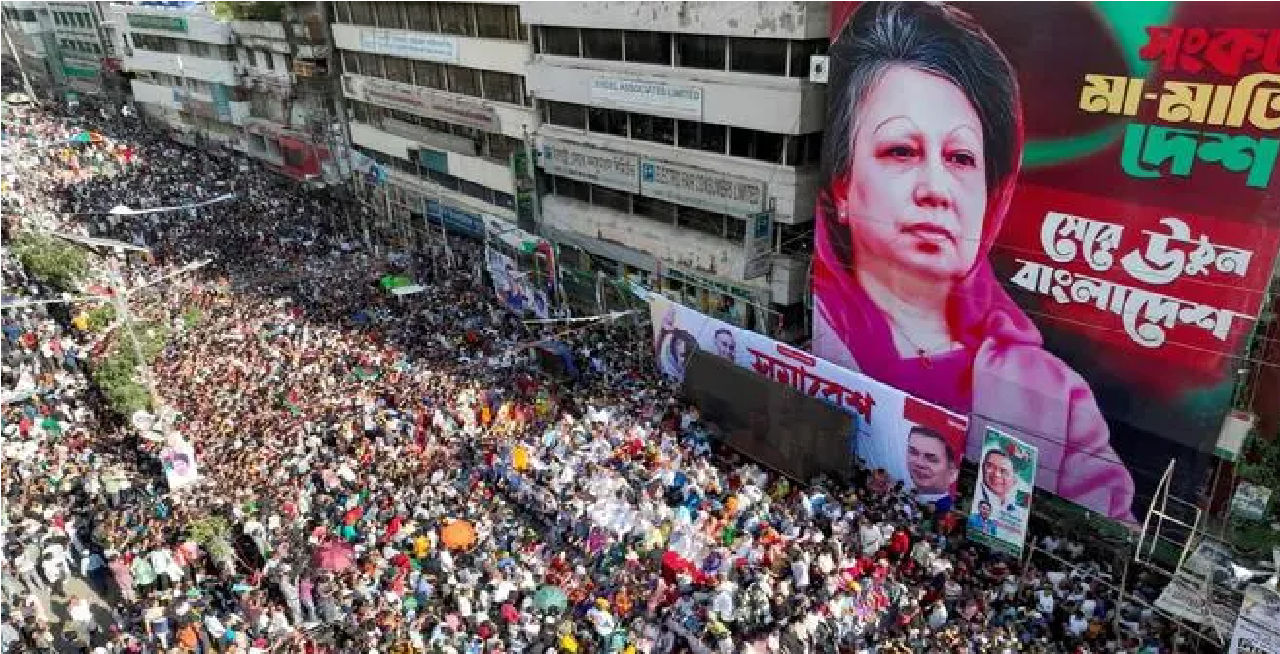
In a dramatic political turnaround, the Bangladesh Nationalist Party (BNP) is set to return to power after nearly two decades, securing more than 200 seats in the latest general elections. Senior leaders within the party have indicated that Tarique Rahman, the party’s acting chairman and son of BNP founder Ziaur Rahman and former Prime Minister Khaleda Zia, is poised to assume the office of Prime Minister.
The development marks a defining moment in Bangladesh’s political history, ending a long period of dominance by the Awami League and signaling a new chapter in governance, opposition politics, and regional diplomacy.
A Sweeping Electoral Victory
According to preliminary results and party sources, the BNP has crossed the majority mark comfortably in the 300-member Jatiya Sangsad (National Parliament), winning over 200 seats. Tarique Rahman himself secured decisive victories from Dhaka-17 and Bogura-6, the latter considered a traditional BNP stronghold.
The landslide outcome reflects widespread political churn following the mass protests of 2024, which eventually led to the fall of the Awami League government headed by Sheikh Hasina. The BNP, which had boycotted earlier elections citing concerns over fairness, capitalized on the changing political mood.
Party insiders describe the mandate as a vote for “stability, democratic restoration, and institutional reform.”
Origins of the BNP
The Bangladesh Nationalist Party was founded on September 1, 1978, by former President Ziaur Rahman. Ziaur Rahman is widely remembered for declaring Bangladesh’s independence over radio on behalf of Sheikh Mujibur Rahman during the 1971 Liberation War after the Pakistani military launched Operation Searchlight.
Following independence, Sheikh Mujibur Rahman became Prime Minister and later President. However, political instability and economic challenges marked the early years of the new nation. On August 15, 1975, Mujibur Rahman and most of his family were assassinated in a military coup, plunging the country into turmoil.
Ziaur Rahman gradually consolidated power and became President in 1977. A year later, he formally launched the BNP, promoting a vision centered on Bangladeshi nationalism, economic self-reliance, and multi-party democracy. The party drew support from diverse political groups, including former members of the Muslim League and leaders opposed to the Awami League.
In 1979, the BNP achieved its first electoral success, winning 207 out of 300 seats. However, Ziaur Rahman’s presidency was cut short when he was assassinated in Chittagong on May 30, 1981. Soon after, military ruler Hussain Muhammad Ershad seized power in 1982, sidelining major political parties including the BNP.
Rise of Khaleda Zia
Following Ziaur Rahman’s death, his widow Khaleda Zia emerged as the face of the BNP. Initially seen as a reluctant political figure, she gradually transformed into a symbol of resistance against Ershad’s military regime.
Her leadership coincided with widespread student-led protests and public discontent against authoritarian rule. The mass uprising of the late 1980s eventually forced Ershad to resign in 1990, restoring parliamentary democracy in Bangladesh.
In the 1991 general elections, the BNP won 140 seats, enabling Khaleda Zia to become Bangladesh’s first woman Prime Minister. She served from 1991 to 1996 and again from 2001 to 2006 after another electoral victory that saw the BNP secure 193 seats.
Her tenure was marked by alternating power struggles with Sheikh Hasina, establishing a two-party political rivalry that shaped Bangladesh’s politics for decades.
The Caretaker Government Crisis
After the BNP’s term ended in 2006, political tensions escalated over the appointment of a caretaker government to oversee elections. President Iajuddin Ahmed assumed the role of Chief Adviser, but the Awami League accused him of favoring the BNP.
Allegations of voter list manipulation and electoral fraud led to violent street protests and widespread unrest. Eventually, a state of emergency was declared, postponing elections. In 2008, after nearly two years of emergency rule, the Awami League won a landslide victory.
One of the new government’s major moves was abolishing the caretaker government system — a decision that later became a flashpoint for opposition parties.
Turbulent Years for the BNP
The years following 2008 proved difficult for the BNP. Khaleda Zia was jailed on corruption charges, and Tarique Rahman went into exile. The party alleged political repression, claiming that rallies were restricted and media access curtailed.
In the 2018 elections, the BNP won only seven seats, remaining a weakened but significant opposition force.
The 2024 elections were boycotted by the BNP after the government refused to reinstate the caretaker system. However, mass protests erupted later that year over economic grievances and governance concerns, leading to the resignation of Sheikh Hasina’s government.
The political vacuum revived the BNP’s fortunes. Khaleda Zia was released from jail, and Tarique Rahman returned to Bangladesh shortly before his mother’s passing, consolidating leadership within the party.
2026 Elections and Coalition Strategy
In the 2026 general elections, the BNP contested 292 out of 300 seats, leaving the remainder for allied parties. Unlike previous alliances, it avoided formal pacts with groups such as Jamaat-e-Islami but included several smaller parties in its broader front.
The campaign focused on promises of democratic restoration, economic reforms, and strengthening institutions. The BNP also emphasized its historical legacy in the Liberation War and its role in resisting authoritarianism.
The sweeping victory suggests that the electorate sought political change after years of polarization.
India-Bangladesh Relations
Tarique Rahman’s expected premiership holds significance for regional diplomacy, particularly relations with India.
In a recent interview, Rahman stated that protecting the interests of Bangladeshi citizens would remain his priority, while expressing willingness to deepen ties with India. Relations between the two countries have faced strain in recent years due to border incidents and concerns over minority rights.
In a symbolic gesture, India’s Prime Minister Narendra Modi reportedly congratulated Rahman following the electoral outcome. Additionally, Indian High Commissioner to Bangladesh Pranay Verma met Rahman in what BNP officials described as a courtesy call lasting around 40 minutes.
Observers see this early diplomatic engagement as an attempt to maintain continuity in bilateral cooperation on trade, security, and water-sharing agreements.
Challenges Ahead
Despite the electoral mandate, the BNP faces several challenges:
- Restoring political stability after years of polarization.
- Reviving an economy strained by inflation and external debt pressures.
- Rebuilding institutional trust in governance and the electoral system.
- Managing coalition dynamics within parliament.
- Balancing domestic priorities with foreign policy commitments.
Political analysts caution that sustaining public confidence will require transparent governance and inclusive policymaking.
A Turning Point in Bangladesh Politics
The BNP’s return to power after 20 years represents more than an electoral victory; it signifies a shift in Bangladesh’s political trajectory. The transition underscores the resilience of multi-party democracy despite prolonged periods of tension.
Tarique Rahman’s leadership will be closely scrutinized, both domestically and internationally. As the son of a former president and the political heir to Khaleda Zia, he inherits both a legacy of struggle and high public expectations.
Whether this moment ushers in a period of stability or renewed rivalry remains to be seen. For now, the BNP’s ascent signals a profound turning point in the political history of Bangladesh — a country whose democratic journey continues to evolve amid challenges and change.
Related Posts