After four shark incidents in two days, New South Wales officials advise swimmers to avoid the ocean and opt for pools instead.
Shark Bites Spur Safety Alerts as NSW Records Fourth Incident in 48 Hours
New South Wales authorities are urging caution along the surf-rich coastline after a sequence of shark encounters left swimmers and surfers injured and led to the closure of dozens of beaches. The latest case — involving a 39-year-old surfer bitten near Limeburners Creek national park on Tuesday morning — marks the fourth shark-related incident within a two-day window, fueling widespread debate about weather patterns, water quality, and marine life behavior along Australia’s east coast.
The Latest Incident: A Close Call North of Port Macquarie
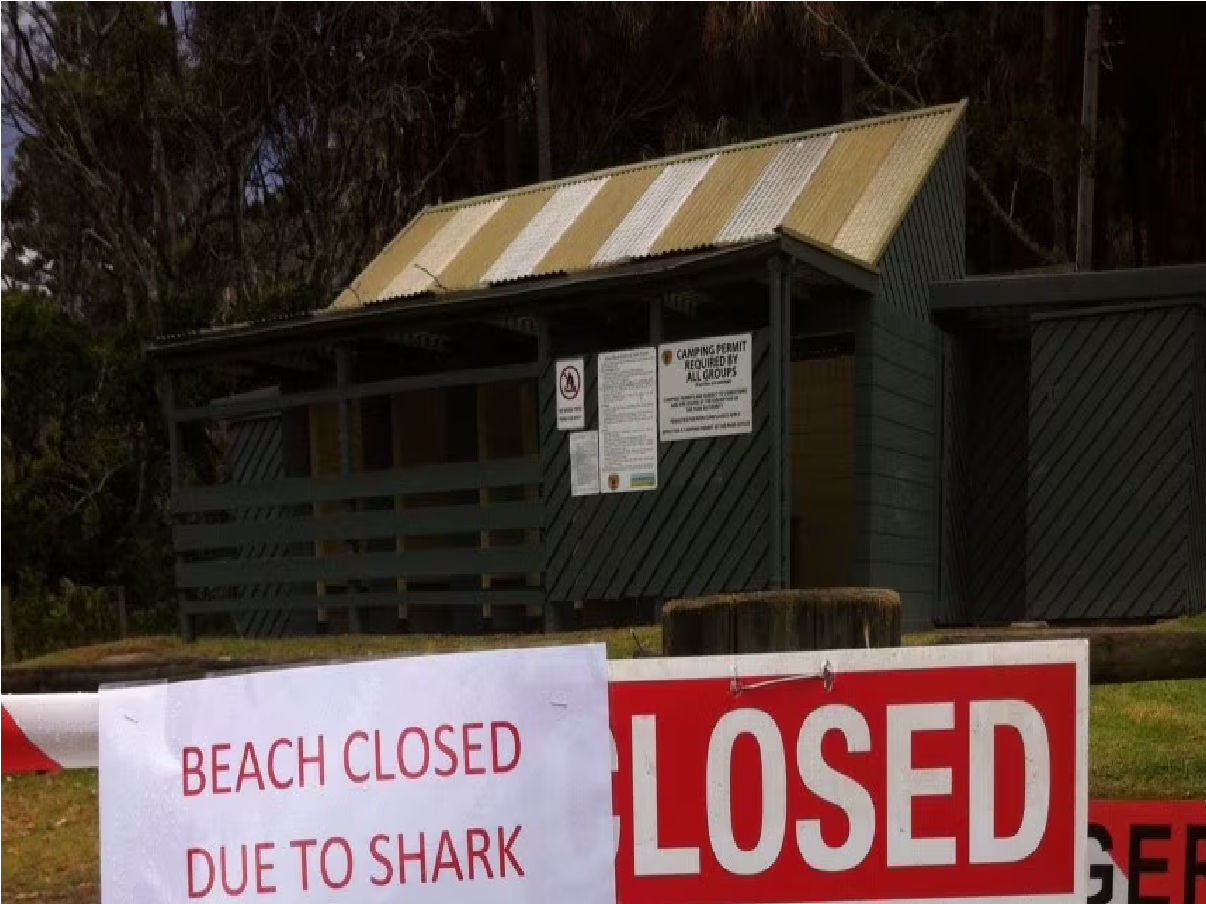
Emergency services responded after reports that a surfer had been bitten at Point Plomer, a well-known location for camping and recreational surfing, situated less than 20 kilometers north of Port Macquarie. According to the local health district, the man was transported to a nearby hospital and later assessed to be in stable condition. Officials described his wounds as minor, consisting mainly of cuts and grazes.
Surf Life Saving NSW chief executive Steven Pearce publicly commented that the man had been “very fortunate” not to suffer deeper injuries. Speaking to national media, Pearce emphasized that conditions in the region were “highly conducive to bull shark activity,” cautioning beachgoers to think twice before venturing into the water.
Rapid Escalation of Risk and Beach Closures
Within hours of the attack, Surf Life Saving NSW launched drone surveillance and mobilized lifeguard crews equipped with jetskis to monitor the shoreline between Crescent Head and Port Macquarie. Authorities subsequently ordered beaches between Town Beach and Crescent Head to close temporarily, citing a verified “shark bite incident” mentioned in updates from the Port Macquarie Australian Lifeguard Service.
The NSW Department of Primary Industries acknowledged the attack and announced an upcoming statement regarding the environmental and biological factors possibly contributing to the uptick in shark activity.
A String of Weekend and Monday Incidents
The mid-north coast is not alone in dealing with shark-related safety responses. In the Sydney region, three separate incidents unfolded within 48 hours prior to the Point Plomer bite:
- Sunday: A 12-year-old boy was hospitalized after being bitten near Nielsen Park, inside Sydney Harbour.
- Monday morning: An 11-year-old surfer paddling off Dee Why had a shark bite through his surfboard, narrowly avoiding serious injury.
- Monday evening: A 27-year-old Wollongong man was bitten at Manly Beach. He remains in critical but stable condition as of Tuesday.
Though non-fatal, the clustering of injuries within a short period prompted officials to enact shoreline closures across much of the northern beaches and Vaucluse areas. The shutdowns involved at least 28 beaches, many of which are expected to remain closed until Thursday, pending environmental assessments and a reevaluation of risk conditions.
Why Now? Experts Point to Murky Waters and Bull Shark Biology
Marine experts stressed that shark bites in Sydney Harbour remain historically rare. Over the past 50 years, only four such incidents have been documented — a remarkably low rate given the city’s population growth and rising participation in water sports. The most recent before this week’s cluster occurred in 2024 when a woman sustained serious leg injuries after a bull shark bit her in Elizabeth Bay.
However, specialists also highlight that sharks — particularly bull sharks — are opportunistic predators and highly adaptive in their feeding behavior. Heavy rainfall across Sydney and surrounding coastal regions has resulted in lowered salinity, sediment-laden runoff, and reduced visibility. These conditions appeal to bull sharks, which possess an unusual biological tolerance for brackish and even freshwater environments.
Marine biologist Prof. Jodie Rummer of James Cook University explained that bull sharks can comfortably move through estuary systems, river mouths, and turbid coastal waters for extended periods. Their flexibility gives them an advantage in hunting bait fish that surge inland during altered tidal and salinity patterns.
More people are also entering the water than ever before. Experts caution that an increase in encounters doesn’t necessarily reflect a rising shark population — instead, it may be a combination of environmental triggers and higher public participation in surfing, swimming, paddleboarding, kayaking, and diving activities.
Human Behavior and Ocean Conditions Play a Role
General swimming guidelines suggest avoiding the water after heavy rainfall due to lowered visibility. Sharks depend on sensory signals to identify prey, and murky conditions increase the likelihood of mistaken identity — a swimmer’s limb, for instance, may resemble a fish or marine mammal in silhouette.
Similarly, dawn and dusk remain high-risk periods, since many shark species hunt actively during low-light windows. Swimming or surfing in groups is strongly recommended, as sharks typically target isolated prey and may be deterred by clusters of movement.
Officials in NSW maintain that many of the coastal closures were precautionary rather than reactionary. Modern shark management strategies prioritize drones, acoustic tagging systems, and surveillance rather than indiscriminate culling — a method widely criticized in scientific circles and largely abandoned in recent years.
Changing Climate, Changing Seas?
Australia’s east coast has faced increasingly volatile weather patterns driven by climate variability and warm ocean temperatures. Heavy rain events, elevated sea temperatures, and ecological shifts in fish populations can alter marine feeding behavior and migratory patterns.
Some marine ecologists argue that global warming may be gradually expanding suitable habitats for bull sharks and other species, bringing them into more frequent contact with human recreational zones, though concrete long-term conclusions remain debated among specialists.
Public Warnings and Safety Messaging Intensify
NSW police and Surf Life Saving NSW used strong wording on Tuesday morning, warning the public to "just go to a local pool" for recreational swimming until the water conditions stabilize. Officials highlighted that two shark-bite patients remain in hospital in serious condition and that further incidents could be avoided if people temporarily refrain from coastal water activities.
Temporary closures and warnings typically remain in effect until:
- Water clarity improves
- Drone patrols confirm lower shark presence
- Environmental runoff decreases
- Swell and tidal patterns normalize
Local councils and surf clubs coordinate closely with the NSW SharkSmart program, which has invested in acoustic listening stations, tagged shark monitoring networks, and real-time alert technology.
Shark Bites: Rare But Viscerally Impactful
Despite the intense media attention surrounding shark encounters, the statistical probability of being bitten in Australia remains exceedingly low. Millions enter coastal waters every year without incident, and fatalities are rarer still.
Public fascination persists due to a mix of evolutionary fear, cinematic mythology (such as Jaws), and the dramatic nature of encounters involving formidable marine predators. Marine biologists stress that sharks are essential apex species within ocean ecosystems, helping regulate fish populations and maintaining biodiversity.
Community Response and Tourism Impacts
Coastal tourism forms a critical part of the NSW economy, with surfing, scuba diving, beach holidays, and recreational boating drawing millions annually. Prolonged closures or safety scares can create ripple effects for accommodation providers, surf schools, cafes, and marine adventure companies.
However, most closures are short-lived and pose minimal long-term consequences. Surf Life Saving NSW argues that transparency and updated communication foster public trust rather than discourage recreation.
Looking Forward
The NSW Department of Primary Industries is expected to address the environmental drivers behind the recent string of attacks in its forthcoming statement. Authorities remain hopeful that improved conditions will allow beaches to reopen and the holiday season to proceed with minimal disruption.
For now, the message is both simple and emphatic: exercise caution, stay informed through official advisories, and recognize that coastal ecosystems — while breathtakingly beautiful — are dynamic environments where humans are visitors, not rulers.
Related Posts