A strong earthquake measuring 5.9 on the Richter scale struck Myanmar, with its tremors also felt in Kolkata.
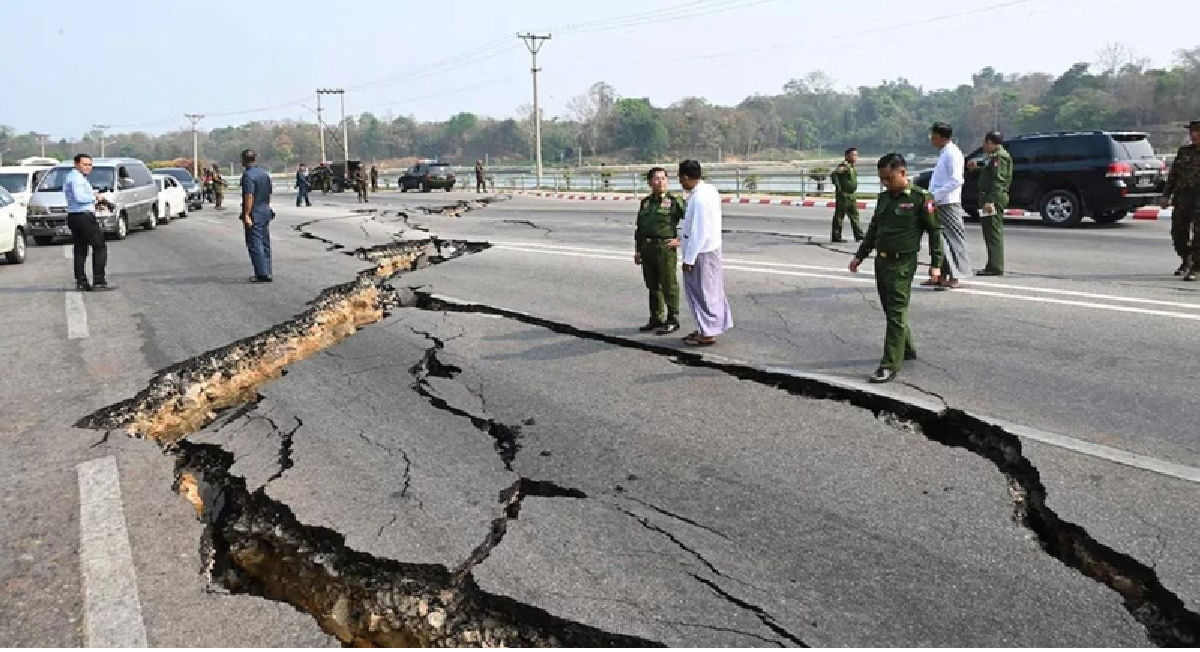
Earthquake of 5.9 Magnitude Hits Myanmar, Tremors Felt in Kolkata
An earthquake measuring 5.9 on the Richter scale struck Myanmar on Tuesday evening, sending tremors across large parts of Southeast Asia and eastern India, including Kolkata and surrounding regions of West Bengal. Although no major casualties or large-scale damage were reported immediately, the quake caused widespread concern and anxiety among residents who experienced shaking in homes, offices, and public spaces. The incident once again highlighted the seismic vulnerability of South and Southeast Asia and the need for preparedness in earthquake-prone regions.
This earthquake serves as a reminder that natural forces beneath the Earth’s surface continue to shape human lives, often without warning. Even moderate earthquakes, such as this one, can have far-reaching effects depending on their depth, epicenter, and geological structure of surrounding regions. The Myanmar quake is particularly significant because it was felt across international borders, affecting communities hundreds of kilometers away from its source.
What Exactly Happened?
According to seismic monitoring agencies, the earthquake occurred in central Myanmar at a depth of approximately 10 kilometers, which classifies it as a shallow earthquake. Shallow earthquakes tend to produce stronger surface shaking compared to deeper ones, making them more noticeable even at great distances. The epicenter was located in a region that lies along one of Myanmar’s active fault lines, an area that regularly experiences tectonic activity.
The quake struck in the evening hours when many people were indoors at home. Residents in Myanmar reported feeling sudden jolts, shaking furniture, and rattling windows. In high-rise buildings, people felt swaying movements that lasted several seconds. In some areas, residents rushed outdoors as a precaution, fearing further shaking or potential structural damage.
In India, particularly in Kolkata, the tremors were also felt strongly enough to cause alarm. Many residents described their beds and chairs shaking or ceiling fans swinging slightly. Some people initially thought heavy vehicles were passing by or that construction work nearby had caused vibrations, but soon realized it was an earthquake. Similar reports came from parts of Bangladesh, including Dhaka, demonstrating how far the seismic waves traveled.
Why Were Tremors Felt So Far Away?
One of the most striking aspects of this earthquake was the distance over which its effects were felt. Kolkata is located more than 500 kilometers from the epicenter in Myanmar, yet people there clearly experienced the tremors. This can be explained by the nature of seismic waves and the geological structure of the region.
Earthquakes generate different types of waves — primary (P-waves), secondary (S-waves), and surface waves. These waves travel through the Earth’s crust at varying speeds and intensities. In regions with stable continental crust, such as much of eastern India, seismic waves can travel efficiently without losing much energy. This allows earthquakes in Myanmar, Nepal, or even Tibet to be felt in distant cities like Kolkata, Guwahati, and Patna.
Additionally, the shallow depth of this earthquake allowed more energy to reach the surface, making the shaking stronger than it might have been if the quake had originated deeper underground. Combined with the relatively high magnitude of 5.9, this explains why people in neighboring countries felt its impact.
Immediate Impact and Public Reaction
Fortunately, there were no immediate reports of large-scale damage or loss of life following the earthquake. However, the psychological impact was significant. Earthquakes often cause panic, even when they do not result in visible destruction, because of their sudden and unpredictable nature.
In Myanmar, residents in affected areas reported running outdoors, gathering in open spaces, and checking buildings for cracks or signs of damage. Schools, offices, and shops temporarily halted activities in some areas as people assessed the situation. Local authorities activated emergency monitoring systems and advised residents to remain alert for possible aftershocks.
In Kolkata, social media was quickly flooded with messages from residents asking whether others had felt the shaking. Many people described the tremors lasting between 5 and 10 seconds, enough to cause unease but not long enough to cause panic. Emergency services in the city said they had received calls from residents seeking confirmation, though no emergency situations were reported.
Such reactions are common in regions where earthquakes are not daily occurrences. Even moderate tremors can cause fear, especially among people living in high-rise buildings or older structures.
Understanding the Richter Scale and Earthquake Magnitude
The earthquake was reported as having a magnitude of 5.9, which places it in the category of moderate to strong earthquakes. On the Richter scale or the modern Moment Magnitude Scale (Mw), earthquakes between 5.0 and 5.9 can cause noticeable shaking and minor damage near the epicenter, especially to poorly constructed buildings. Earthquakes between 6.0 and 6.9 are considered strong and can cause significant damage in populated areas.
It is important to note that the earthquake scale is logarithmic. This means that each whole number increase represents about 32 times more energy release than the previous number. So, a magnitude 6.9 earthquake is about 32 times stronger than a 5.9 earthquake and nearly 1,000 times stronger than a 4.9 earthquake in terms of energy release.
However, the actual impact of an earthquake depends on more than just its magnitude. Factors such as depth, distance from population centers, building quality, soil type, and preparedness all play crucial roles in determining how destructive an earthquake will be.
Myanmar’s Seismic Vulnerability
Myanmar is located in one of Southeast Asia’s most active seismic zones. The country lies near the boundary between the Indian Plate and the Eurasian Plate, which are constantly moving and interacting. This movement causes stress to build up along faults in the Earth’s crust, eventually leading to earthquakes when the stress is released.
Several major fault systems run through Myanmar, including the Sagaing Fault, which stretches north to south across much of the country and is responsible for many of its earthquakes. Historically, Myanmar has experienced numerous destructive earthquakes, including powerful events that have damaged cities, temples, bridges, and infrastructure.
Because of this geological setting, earthquakes of moderate to strong magnitude are not uncommon in Myanmar. However, population growth, urbanization, and aging infrastructure have increased the potential risk of casualties and damage. Many buildings in rural areas are not constructed according to modern seismic safety standards, making them more vulnerable to collapse during strong shaking.
The recent earthquake, although moderate, serves as another warning of the constant seismic threat facing the region and the importance of strengthening buildings and emergency preparedness systems.
Why Eastern India Feels Myanmar Earthquakes
India, especially its eastern and northeastern regions, is also prone to earthquakes due to the collision between the Indian Plate and the Eurasian Plate. This tectonic interaction has created the Himalayan mountain range, one of the most seismically active regions in the world.
Although Kolkata is not located directly on a major fault line, it lies close enough to active seismic zones in northeastern India, Myanmar, and Bangladesh to feel tremors from earthquakes occurring in those regions. The soft alluvial soil of the Gangetic delta can also amplify ground motion, making shaking more noticeable in cities like Kolkata even when earthquakes originate far away.
Historically, Kolkata has experienced tremors from major earthquakes in Assam, Nepal, and Myanmar. For example, the devastating 1897 Assam earthquake, one of the strongest in Indian history, caused damage as far away as Kolkata. While modern buildings and improved engineering standards have reduced the risk of collapse, the city remains vulnerable, especially in older neighborhoods with aging infrastructure.
Aftershocks and Ongoing Monitoring
Following any significant earthquake, scientists expect aftershocks, which are smaller tremors that occur as the Earth’s crust adjusts to changes in stress caused by the main quake. These aftershocks can continue for hours, days, or even weeks, depending on the magnitude of the main event.
In the case of the Myanmar earthquake, seismic monitoring agencies placed the region under close observation to detect any aftershocks or unusual activity. Although most aftershocks are harmless, they can sometimes cause additional damage to already weakened structures or trigger landslides in hilly regions.
Authorities in Myanmar and neighboring countries advised residents to remain alert, avoid damaged buildings, and follow safety guidelines in case of further shaking. Emergency response teams were also placed on standby to respond quickly if needed.
How Earthquakes Are Monitored and Reported
Modern earthquake monitoring relies on a global network of seismographs, instruments that detect ground motion and record seismic waves. These instruments send data to national and international agencies, which analyze the information to determine the earthquake’s location, depth, and magnitude within minutes of its occurrence.
Organizations such as the United States Geological Survey (USGS), the European-Mediterranean Seismological Centre (EMSC), and national geological agencies in India and Myanmar provide rapid updates that help governments, media outlets, and the public understand what has happened.
In recent years, earthquake early warning systems have been developed in some countries. These systems detect the initial P-waves of an earthquake and send alerts before the more damaging S-waves arrive, giving people a few seconds to take protective action. While such systems are not yet widespread in South Asia, there is growing interest in expanding seismic monitoring and early warning capabilities in the region.
The Importance of Earthquake Preparedness
Even though the Myanmar earthquake did not cause major destruction, it highlights the importance of earthquake preparedness, especially in densely populated regions. Preparedness involves not only strong infrastructure but also public awareness and education.
People living in earthquake-prone areas should know basic safety measures, such as:
- Dropping to the ground, taking cover under sturdy furniture, and holding on during shaking
- Staying away from windows, heavy objects, and exterior walls
- Avoiding elevators and stairways during earthquakes
- Moving to open areas after the shaking stops
Buildings should be constructed or retrofitted to meet seismic safety standards, especially schools, hospitals, bridges, and high-rise residential structures. Governments and local authorities must also conduct regular emergency drills, enforce building codes, and develop disaster response plans.
Events like this earthquake serve as reminders that even regions that experience earthquakes infrequently should not become complacent. Preparedness can save lives and reduce damage when stronger earthquakes occur.
Psychological and Social Impact
Beyond physical damage, earthquakes often leave a psychological impact on affected communities. The sudden shaking, uncertainty, and fear of aftershocks can cause anxiety, stress, and sleep disturbances, especially among children, elderly individuals, and those who have previously experienced disasters.
In Kolkata and Myanmar, many people reported feeling unsettled even after the shaking stopped. Some stayed outdoors for a while, hesitant to return inside, while others checked news updates and contacted family members to ensure their safety. Such reactions highlight the emotional toll of natural disasters, even when they do not result in visible destruction.
Providing clear information, reassurance, and guidance is crucial in such situations. Authorities and media outlets play an important role in preventing rumors, panic, and misinformation by sharing accurate updates and safety advice.
Regional Cooperation and Disaster Management
Earthquakes do not respect national borders, as demonstrated by this event, which was felt across Myanmar, India, and Bangladesh. This underlines the importance of regional cooperation in disaster monitoring, preparedness, and response.
South and Southeast Asian countries share similar geological risks and population challenges. By exchanging seismic data, improving communication systems, and coordinating disaster response strategies, these nations can better protect their citizens. Joint training programs, early warning systems, and infrastructure development initiatives can significantly enhance regional resilience to earthquakes and other natural disasters.
International organizations and scientific institutions also play a role by providing technical expertise, funding, and research support. Continued investment in seismology, engineering, and disaster management is essential to reduce the impact of future earthquakes.
Conclusion: A Wake-Up Call for Seismic Awareness
The 5.9 magnitude earthquake in Myanmar, with tremors felt as far away as Kolkata, serves as a powerful reminder of the Earth’s dynamic nature and the constant movement beneath our feet. Although the quake did not result in major casualties or widespread damage, it caused significant concern and demonstrated how interconnected regions can be affected by natural events occurring hundreds of kilometers away.
Such incidents emphasize the importance of preparedness, strong infrastructure, public awareness, and effective communication systems. They also highlight the need for continued investment in scientific research and disaster management capabilities across earthquake-prone regions.
As cities grow larger and populations become more concentrated, the risks associated with earthquakes increase. While earthquakes themselves cannot be prevented, their impact can be significantly reduced through education, planning, and resilience-building measures. The Myanmar earthquake of 2026 may pass without lasting damage, but its message remains clear: societies must remain vigilant and prepared for the powerful forces of nature that shape our world.
Related Posts